

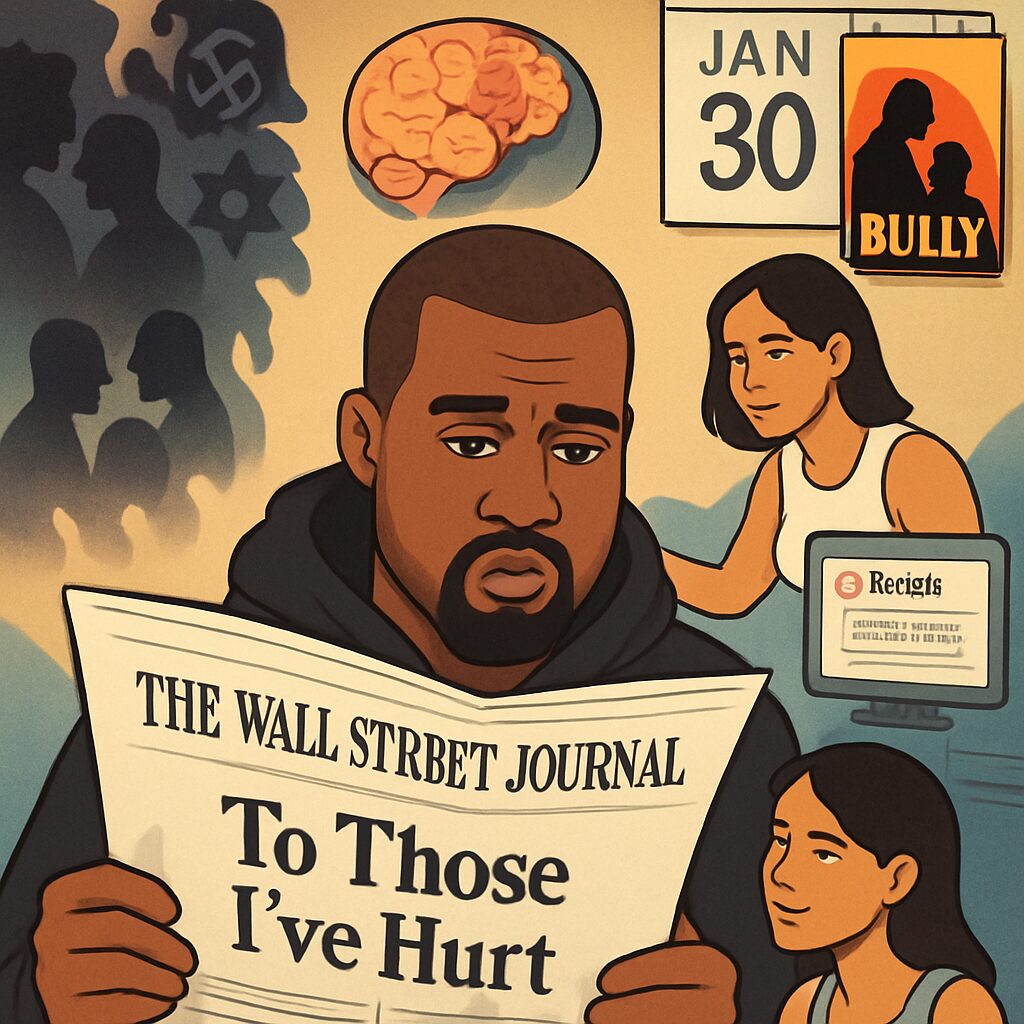
Kanye West, now known as Ye, has issued a sweeping public apology for his antisemitic and offensive remarks through a full-page advertisement in The Wall Street Journal, attributing his behavior to bipolar disorder exacerbated by a 2002 car accident.
The ad, which ran in Monday’s print edition, features an open letter titled ‘To Those I’ve Hurt,’ where Ye expresses deep regret for his actions over recent years. He explains that manic episodes linked to his bipolar type-1 diagnosis caused him to lose touch with reality, leading to harmful statements and behaviors that have drawn widespread condemnation. Ye details how a 2002 car accident shattered his jaw and caused a frontal lobe injury, which went undiagnosed until 2023, worsening his mental health struggles and contributing to his erratic public persona.
In recent years, Ye’s behavior escalated into dangerous territory, including antisemitic statements, praise for Adolf Hitler on platforms like Infowars, and the sale of swastika-emblazoned T-shirts. These actions were part of a four-month manic episode in 2025 that he says nearly destroyed his life, during which he felt disconnected from his true self and gravitated toward destructive symbols.
Directly addressing the Jewish community, Ye writes, ‘I am not a Nazi or an antisemite. I love Jewish people,’ and apologizes for the pain he caused. He also extends an apology to the Black community, acknowledging their unwavering support and expressing remorse for letting them down, particularly referencing his 2018 comments about slavery.
Ye credits his wife, Bianca Censori, with encouraging him to seek help, and he has found solace in Reddit forums where others share similar experiences with bipolar disorder. He is now committed to a regimen of medication, therapy, exercise, and clean living to manage his condition and regain clarity, emphasizing his dedication to accountability and meaningful change.
Looking ahead, Ye is channeling his energy into positive projects, including his upcoming album ‘Bully,’ set for release on January 30. The album, which features his son Saint West, represents a new direction as he aims to rebuild his career and make amends through his art, focusing on creating meaningful contributions to society.
This public apology marks a significant attempt at redemption from one of music’s most controversial figures, but its reception will depend on Ye’s sustained actions and sincerity. As antisemitism remains a pressing global issue, his words carry weight, and his journey toward healing and accountability will be closely monitored by both supporters and critics alike.

