

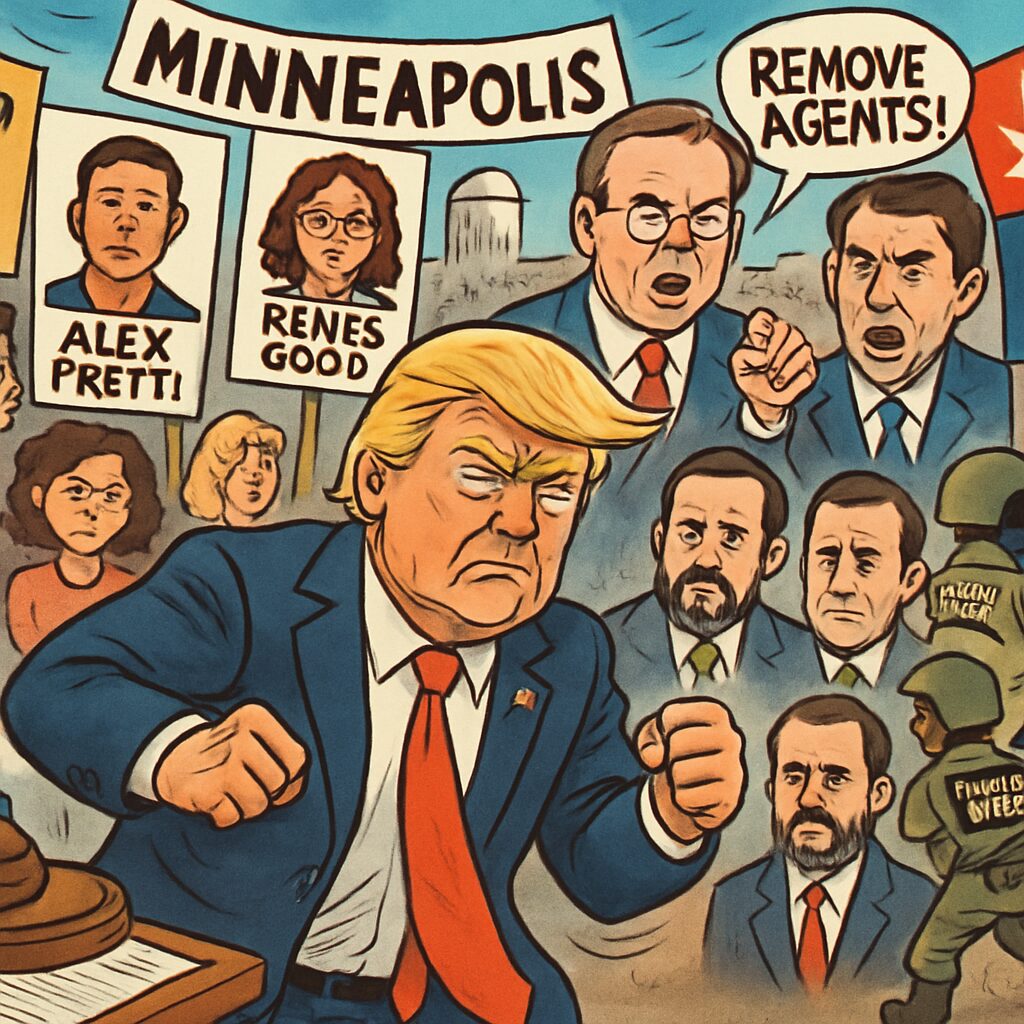
President Donald Trump’s aggressive immigration crackdown in Minneapolis has faced significant pushback from public outrage and political resistance, forcing him to scale back federal agents’ presence and adjust his tone. This analysis highlights how even Trump’s push for unchecked power is constrained by the potent combination of moral indignation and political reality.
The immediate catalyst was the fatal shooting of Alex Pretti, an ICU nurse, by a Border Patrol agent in Minneapolis on January 24, 2026, following the earlier killing of Renee Good. These incidents sparked daily protests and violent clashes, with videos contradicting official accounts and fueling public fury. The White House initially defended the agents, but mounting evidence and widespread condemnation forced a reassessment.
Political pressure escalated rapidly, with Minnesota Governor Tim Walz and Minneapolis Mayor Jacob Frey repeatedly calling for the removal of federal immigration agents. Bipartisan criticism emerged, as Republicans like Senator Ted Cruz and Representative Mike Lawler expressed concern over the tone and actions, highlighting a rift within the GOP. This internal dissent, coupled with vocal opposition from Democrats, created a coalition of resistance that Trump could not ignore.
In response, Trump announced the deployment of border czar Tom Homan to Minnesota and agreed to withdraw some Border Patrol agents, including commander Gregory Bovino, who had made inflammatory statements. This move was seen as a tactical retreat to manage optics and de-escalate tensions, with Trump acknowledging that “the present situation cannot continue” in calls with local officials.
The Minneapolis crisis is part of a broader pattern where Trump’s second-term power grabs have met unexpected resistance. Earlier in the week, his attempt to pressure Denmark into ceding Greenland failed due to unified NATO opposition, and comments on Venezuela drew rebukes. These incidents demonstrate that both domestic adversaries and international allies are willing to band together to check his ambitions.
Constitutional and legal challenges have also played a role, with invocations of the First and Second Amendments in protests and court cases. Legal actions are slowing executive overreach, and the firearms lobby objected to agents’ comments on Pretti’s gun ownership. This legal pushback underscores the enduring strength of institutional checks in American democracy.
The fallout has potential political implications, as immigration—a key issue for Trump—could become a liability in the November midterm elections. Public support for military-style deportations appears limited, and the administration’s credibility has been damaged. Democrats are leveraging the crisis to demand accountability measures in funding bills, further complicating Trump’s agenda.
Globally, the events have strained alliances, with trust in the U.S. diminishing among NATO members and partners like Canada considering alternatives. The narrative of Trump as an untouchable strongman is being challenged, showing that even his most aggressive moves can be tempered by collective resistance and moral outrage.
In conclusion, while Trump remains a dominant political force, the Minneapolis showdown reveals that political reality and public sentiment can still impose limits on his power, offering a cautionary tale for future confrontations.

