

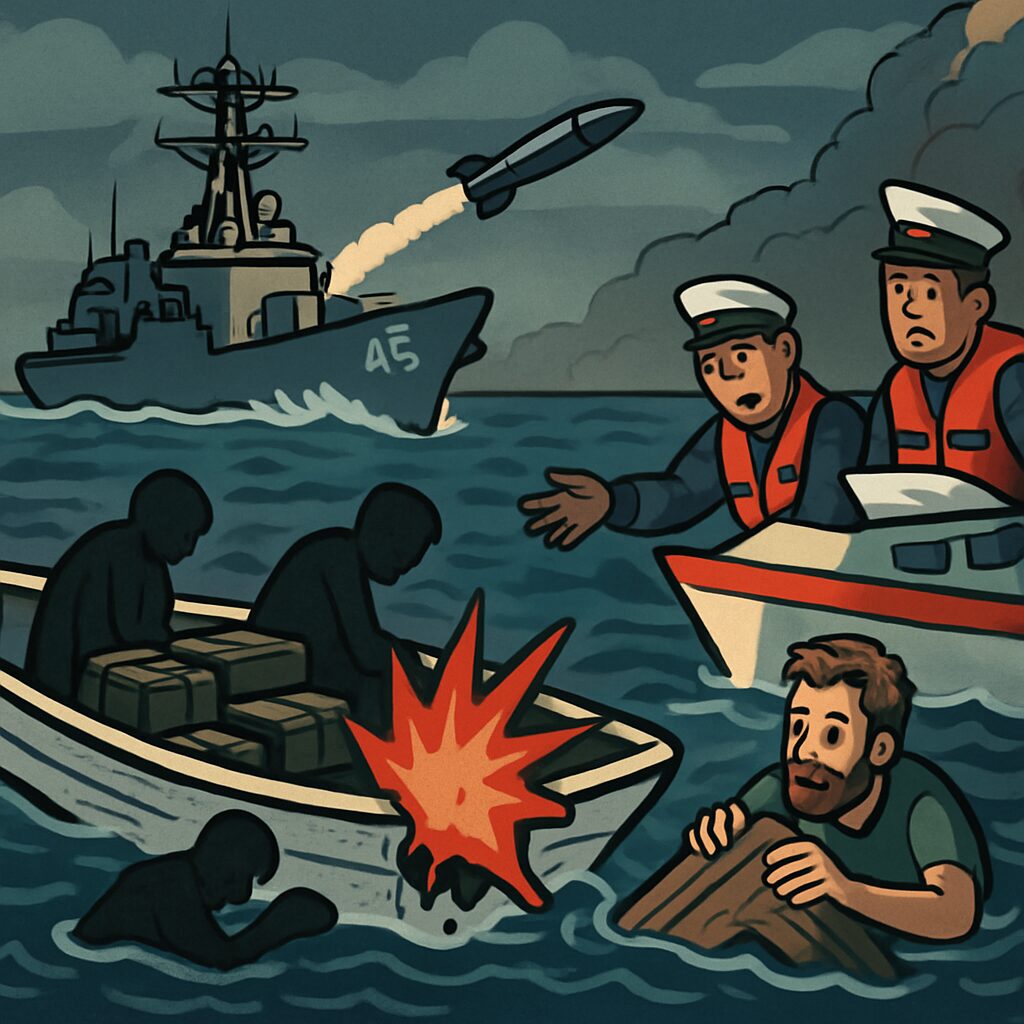
The United States military conducted a strike in the eastern Pacific Ocean on January 23, 2026, killing two individuals aboard an alleged drug-trafficking vessel and leaving one survivor, according to official statements. This incident marks the latest action in a controversial campaign targeting narcotics smuggling in the region.
On Friday, January 23, U.S. Southern Command reported that a lethal kinetic strike was carried out on a boat suspected of drug trafficking, resulting in two fatalities. The survivor has not yet been recovered, and the U.S. Coast Guard is coordinating search and rescue operations. The strike was ordered by Defense Secretary Pete Hegseth as part of Joint Task Force Southern Spear, an ongoing military effort aimed at disrupting drug routes. Intelligence indicated the vessel was transiting known narco-trafficking paths, justifying the engagement under the administration’s policy.
This attack is the first in 2026, continuing a series that began in September 2024 under the Trump administration’s Operation Southern Spear. To date, the campaign has involved at least 36 strikes, leading to approximately 125 deaths in the Caribbean and eastern Pacific. Officials assert that these actions are necessary to combat the flow of drugs into the United States, but critics argue they represent an escalation with severe humanitarian costs. The pace of strikes has varied, with this latest incident following a relative lull after previous engagements.
Previous strikes have sparked significant controversy, particularly a September 2 incident where a follow-up ‘double-tap’ strike killed two survivors clinging to wreckage, raising allegations of war crimes. In December, eight individuals abandoned their boat before a second strike and were never found, presumed dead. These events have drawn condemnation from human rights groups and lawmakers, who demand transparency and accountability. The administration has faced pressure to release video evidence and legal justifications for its actions.
Legal challenges are mounting, with organizations like the American Civil Liberties Union suing for the release of secret legal opinions used to justify the strikes. International experts, including United Nations officials, have warned that the killings may violate prohibitions on arbitrary deprivation of life and international human rights law. The U.S. classification of drug traffickers as unlawful combatants in an ‘armed conflict’ is disputed, as drug trafficking is a crime, not an act of war. Families of victims from countries like Colombia and Trinidad and Tobago have filed complaints, claiming their loved ones were innocent fishermen.
The strike occurs against the backdrop of heightened U.S. military involvement in Latin America, including the recent operation that captured Venezuelan leader Nicolás Maduro. This context has led to concerns about regional destabilization and the erosion of international norms. While the Trump administration defends the strikes as vital for national security, the ongoing legal and ethical debates highlight the complex implications of such military actions.
Looking ahead, the future of the boat strike campaign is uncertain as legal proceedings continue and international scrutiny intensifies. Calls for investigation and compensation for victims’ families are growing, with appeals to bodies like the Inter-American Commission on Human Rights. The U.S. must navigate these challenges while addressing the root causes of drug trafficking and ensuring its methods align with legal and humanitarian standards.

