

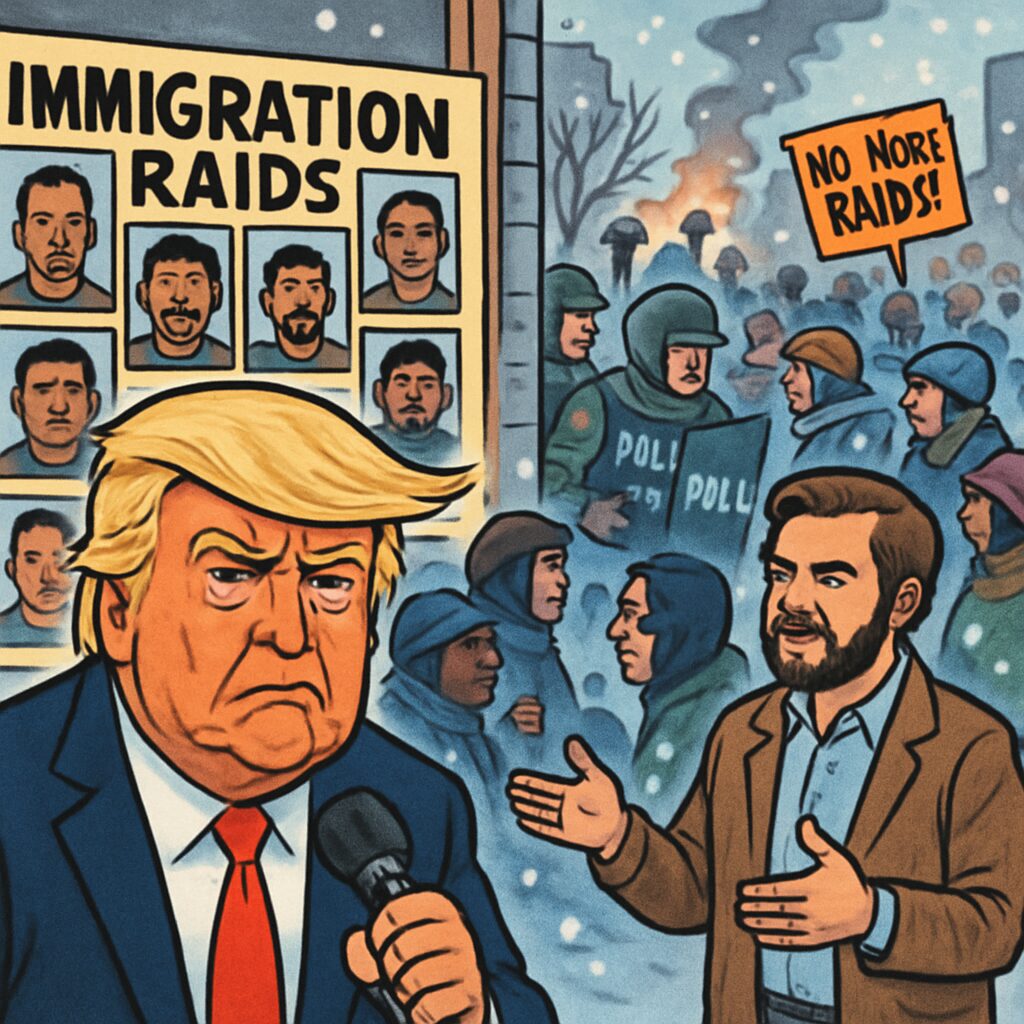
President Donald Trump has privately expressed frustration that his administration is losing control of the narrative on immigration amid ongoing protests in Minnesota, following a fatal shooting by an Immigration and Customs Enforcement (ICE) agent earlier this month. This internal concern highlights the political challenges as the White House seeks to refocus public attention on its enforcement achievements while grappling with chaotic scenes and growing public alarm.
The unrest in Minnesota escalated after an ICE agent fatally shot Renee Good during an immigration raid on January 7, 2026, sparking widespread protests and clashes between federal agents and demonstrators. Videos of tense confrontations and arrests have circulated widely, drawing national attention and raising questions about the administration’s aggressive approach to immigration enforcement in Democratic-leaning cities. The protests, occurring in frigid temperatures, have underscored the deep divisions over Trump’s policies, with local officials and activists condemning the operations as eroding trust and escalating violence.
Behind closed doors, Trump has voiced frustration that the messaging around his immigration crackdown is getting lost amid the chaos, according to sources familiar with the discussions reported by CNN. He believes that the positive aspects of ICE’s work—such as removing dangerous criminals—are being overshadowed by the protests and negative optics. In response, Trump held an impromptu press conference, where he thumbed through mugshots of individuals arrested in the raids, emphasizing the alleged crimes to justify the enforcement actions and reiterate his commitment to deporting offenders.
Vice President JD Vance played a key role in attempting to calm tensions, visiting Minneapolis on January 22 to engage with community members and promote cooperation. His tone marked a departure from earlier bombastic rhetoric, as he acknowledged the chaos and called for improved coordination between federal and local authorities. However, administration officials cautioned that this softer approach does not signal a shift in policy, with White House spokeswoman Abigail Jackson stating that the message remains unchanged: enforcing federal immigration law and targeting criminal immigrants.
Internally, White House advisers have been plotting how to move the narrative away from the Minneapolis unrest and instead highlight ICE’s achievements. Discussions have focused on amplifying the agency’s work more aggressively, without toning down rhetoric, as some officials worry that the clashes could spiral out of control and become a political liability. A senior official told CNN that there is an ongoing effort to develop new ideas to remind the public of why the immigration crackdown was initiated, emphasizing the need to control the information war.
The situation carries significant political implications, with recent polls showing that 51% of Americans believe ICE enforcement actions are making cities less safe. Republican strategists have warned that the protests could impact the upcoming midterm elections if not managed carefully, as scenes of conflict may embolden opposition and alienate voters. Representative Tony Gonzales of Texas noted that protesters braving subzero temperatures indicate high motivation, urging his party to refine its messaging to avoid electoral backlash and address constituent anxieties.
Background factors include a welfare-fraud scandal in Minnesota’s Somali community, which prompted the Trump administration to surge federal agents into the state in late December and January. This escalation led to increased enforcement operations, mistaken detentions of U.S. citizens, and more viral videos of agents questioning individuals about their status. The high-profile nature of these events has fueled concern even among some Republican allies, who view the aggressive tactics as politically fraught despite general support for deporting certain undocumented immigrants.
Amid the turmoil, discussions have resurfaced about the potential use of the Insurrection Act, which allows deployment of active-duty troops within the U.S., but officials have been hesitant due to political complications rather than legal ones. As of now, it remains a last resort, with the administration focusing on containing the fallout through messaging and operational adjustments. The ongoing challenges in Minnesota underscore the broader struggle to balance enforcement priorities with public perception, as Trump and his team work to regain control of a narrative that risks slipping away.

