

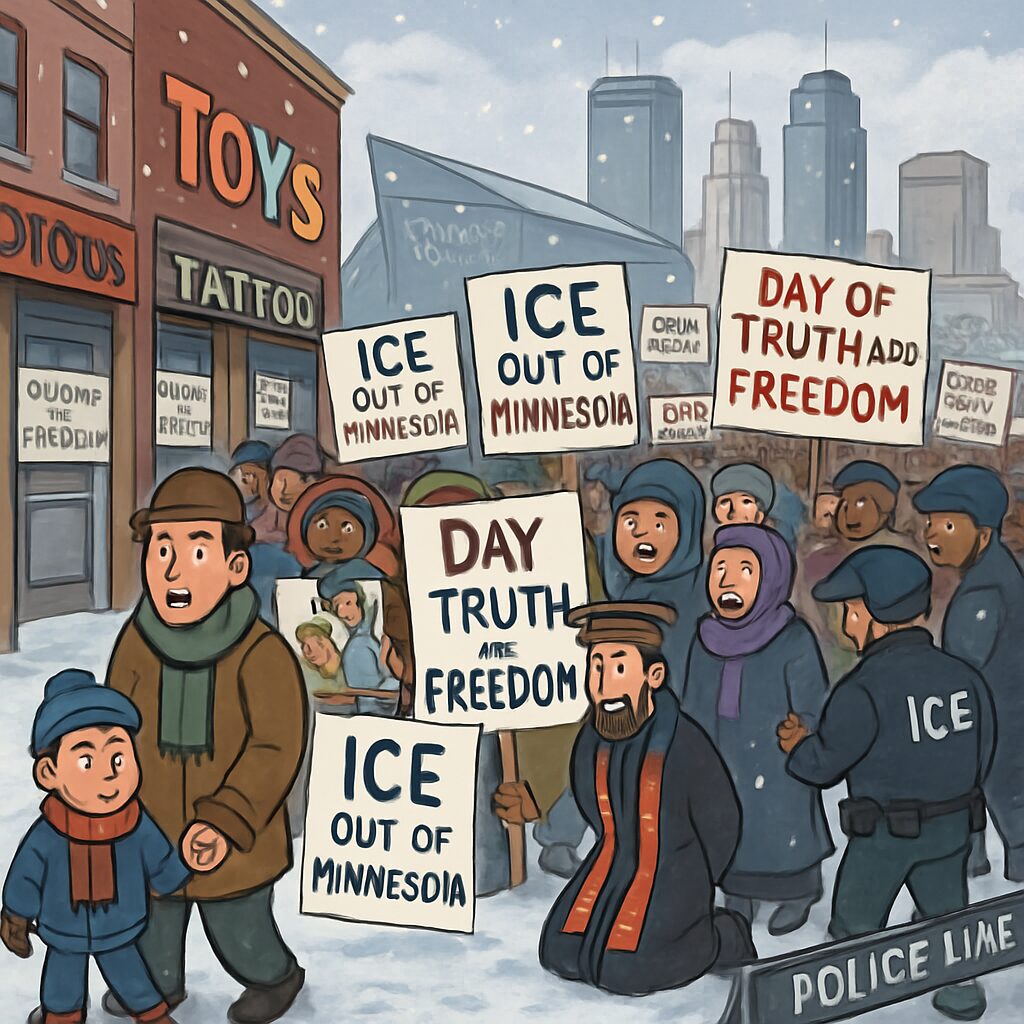
On January 23, 2026, hundreds of Minnesota businesses shut down and thousands of protesters took to the streets in a coordinated statewide strike against the presence of U.S. Immigration and Customs Enforcement (ICE), marking one of the largest demonstrations against federal immigration policies in the state’s recent history. The protests, organized under the banner ‘ICE Out of Minnesota: Day of Truth and Freedom,’ saw widespread participation from community members, faith leaders, and labor unions, calling for an end to the ongoing ICE operation known as ‘Operation Metro Surge.’
The ICE surge, ordered by the Trump administration and ongoing for over six weeks, has been characterized as a public safety operation targeting criminals illegally in the country. However, critics argue that it has led to the detention of migrants without criminal records and even U.S. citizens, fueling fear and outrage across Minnesota. The killing of 37-year-old Minneapolis woman Renee Good earlier this month further escalated tensions, with local officials condemning the federal actions.
Thousands of demonstrators braved frigid temperatures as low as -23°C (-10°F) to march from U.S. Bank Stadium to the Target Center in downtown Minneapolis, where a rally was held inside the arena. Organizers estimated around 50,000 participants, though exact numbers were not confirmed. Simultaneously, hundreds of businesses, from restaurants and tattoo parlors to toy stores, closed their doors in solidarity, with some owners citing moral and economic reasons for their participation.
Specific incidents have drawn national attention, including the detention of a 5-year-old boy, Liam Ramos, and his father, Adrian Alexander Conejo-Arrias, in Columbia Heights. ICE claimed the father abandoned his son, but family lawyers stated they have no criminal record and are seeking asylum. In another case, a 2-year-old girl named Chloe was detained with her father in south Minneapolis, prompting an emergency court order for her release. These events have sparked widespread condemnation and raised questions about the tactics used by federal agents.
Faith leaders played a significant role in the protests, with dozens arrested at Minneapolis-St. Paul International Airport while calling on airlines to refuse transporting ICE detainees. Additionally, activists were detained at a church where a local ICE official serves as pastor, though many were released on Friday. Vice President JD Vance visited Minneapolis, blaming local authorities for a ‘failure of cooperation,’ while Hennepin County Attorney Mary Moriarty emphasized that ICE agents are not immune to state law and that investigations into shootings involving ICE are ongoing.
The economic impact has been severe for some businesses. For instance, restaurant owner Kim Bartmann reported a 30% drop in sales over the past three weeks due to the ICE operation, forcing her to limit hours. However, other businesses, like The Lotus, chose to stay open to serve free food to the community, viewing it as a more impactful form of protest. The strike reflects broader concerns about immigration enforcement disrupting local economies and daily life.
As the protests concluded, the focus shifts to legal and political next steps. With sanctuary policies in place in some Minnesota cities limiting cooperation with ICE, the clash between federal and local authorities continues. The resignation of an FBI agent over the handling of Renee Good’s investigation adds to the turmoil. Moving forward, community leaders are urging Congress to provide oversight on ICE operations, while families affected by detentions await outcomes in immigration court.

