

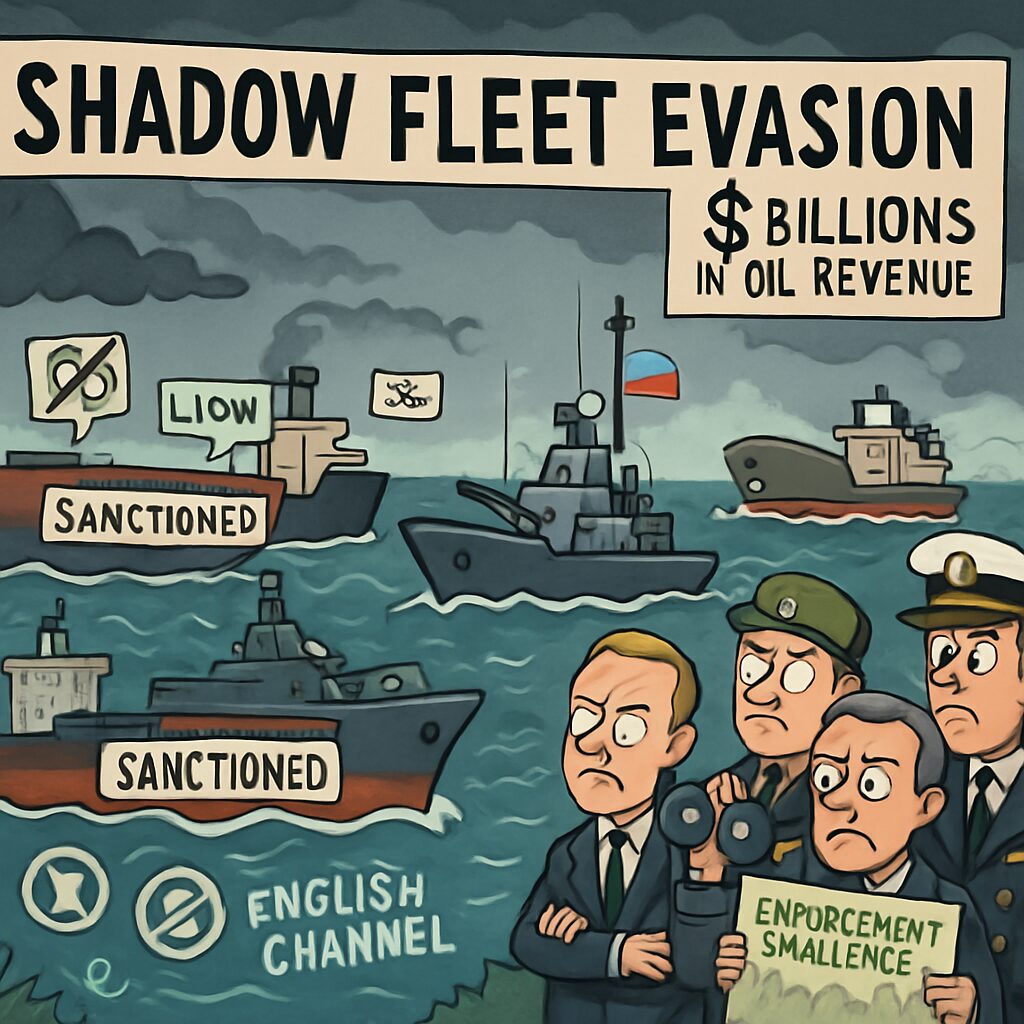
Dozens of oil tankers sanctioned by the UK in response to Russia’s war in Ukraine have sailed through the English Channel this month, defying British government vows to take assertive action against Moscow’s shadow fleet. This ongoing maritime activity underscores the difficulties in enforcing Western sanctions designed to curb Russian oil exports and fund the war effort.
Since Russia’s full-scale invasion of Ukraine, Moscow has relied on a shadow fleet of aging tankers with obscured ownership to evade sanctions on its oil exports. The UK, along with allies, has imposed sanctions and pledged to disrupt this network, but recent movements through the Channel highlight persistent gaps in enforcement. BBC Verify has tracked 42 sanctioned tankers passing through the English Channel in January 2026, even after the UK government received legal assurances earlier this month that such vessels could be detained.
Among the vessels is the Sofos, a tanker sanctioned in May 2025, which traveled from Venezuela to near St. Petersburg, Russia, after loading oil in Russia and switching off its tracking signal. Another notable ship is the Nasledie, over 20 years old and sanctioned by the UK in May 2025, which entered the Channel carrying about 100,000 tonnes of Urals crude shortly after the BBC reported on the UK’s legal advice. The ship had previously changed its name and registry to evade detection, part of a broader pattern of obfuscation.
In response to the UK’s threats, Russia has escalated its tactics. On January 20, The Times reported that a Russian warship escorted the sanctioned tanker General Skobelev through the Channel, and Russian officials have warned that any detention would be viewed as a violation of international law. This move signals Moscow’s willingness to protect its oil shipments militarily, complicating enforcement efforts.
The shadow fleet has become crucial for Russia, helping to mitigate the impact of an oil embargo imposed since 2022 and propping up an economy battered by sanctions. Analysts estimate that these tankers move between $87 billion and $100 billion worth of oil annually, with 68% of Russian crude oil carried on sanctioned vessels as of December 2025. This revenue stream is vital for funding the war in Ukraine, making disruption a key strategic priority.
Despite vows from UK Foreign Secretary Yvette Cooper to “tighten the chokehold” on Russia, British troops have yet to independently seize any shadow fleet vessels in the Channel. MPs like Dame Emily Thornberry and Mike Martin have expressed disappointment, questioning why the Royal Marines, trained for such operations, have not been deployed to board the tankers. Martin noted that projecting force off the Straits of Dover is not difficult, emphasizing the need for more decisive action.
Enforcement challenges are compounded by the tankers’ evasive strategies, such as flying false flags, switching off tracking signals, and broadcasting false locations. For instance, the Arcusat, previously sanctioned by the US, passed through the Channel on January 8 before being stopped by German police, highlighting the need for coordinated international action. Analysts say that once vessels make direct port calls in Russia, they become less afraid of compliance, further complicating monitoring.
Looking ahead, the continued passage of sanctioned tankers through key waterways like the English Channel raises questions about the effectiveness of Western sanctions regimes. As the war in Ukraine persists, disrupting Russia’s shadow fleet remains a priority, but success will require more assertive and coordinated measures among allies to cut off vital revenue streams funding the conflict. The UK’s Ministry of Defence has stated that deterring the shadow fleet is a priority, but tangible results have been limited so far.

