

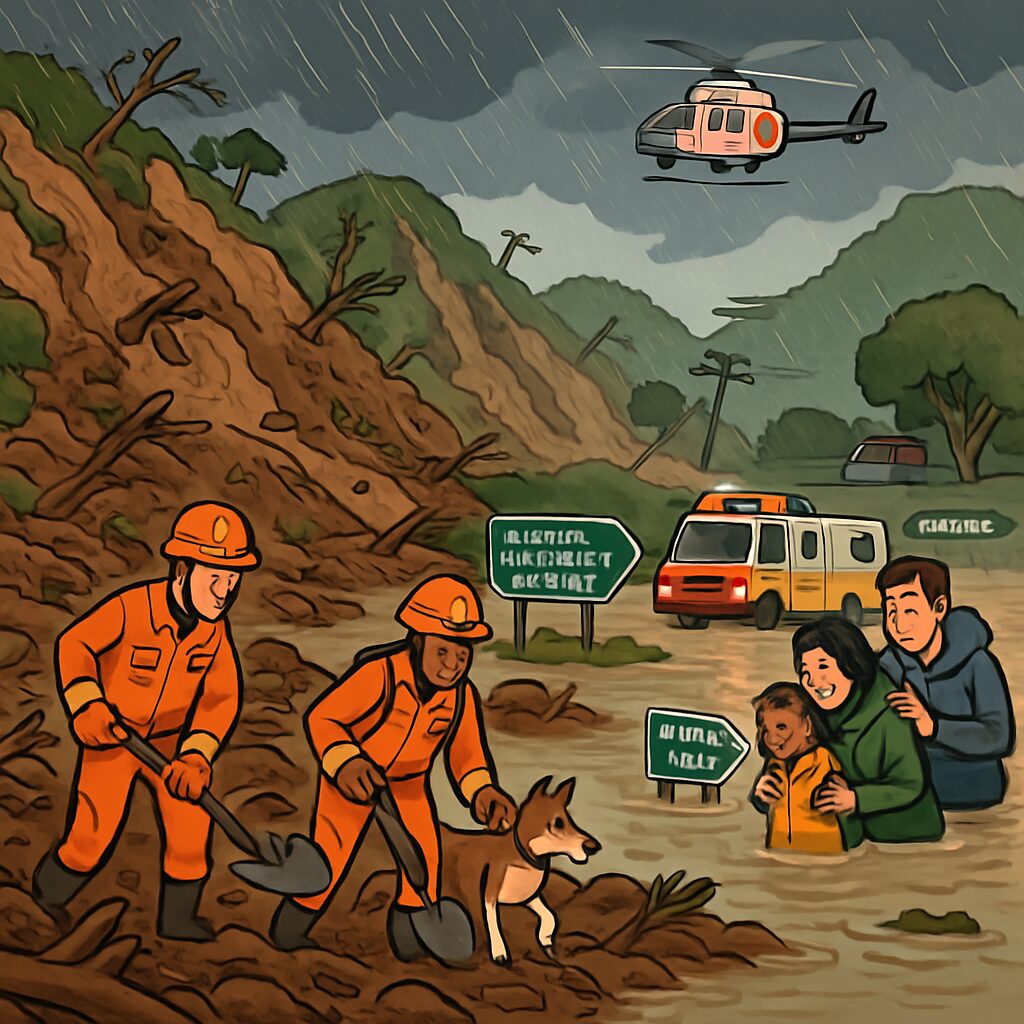
Two people have died and rescue teams are desperately searching for several missing individuals after landslides struck New Zealand’s North Island, triggered by torrential rains that have caused widespread flooding and disruption.
The landslides occurred on Thursday, January 22, 2026, with one fatal incident at Welcome Bay on the east coast claiming two lives, and another at the popular Mount Maunganui campsite leaving an unknown number of people missing, including at least one child. Emergency services were quickly deployed, but the unstable ground has hampered rescue efforts, with officials reporting no signs of life since the morning.
Rescue operations are ongoing through the night, with teams using sniffer dogs and excavators to sift through the debris at the campsite. Fire and Emergency New Zealand commander William Pike stated that initial responders heard voices from the rubble but had to withdraw due to safety concerns over further landslides. Police Superintendent Tim Anderson expressed hope that survivors could still be found, though the exact number of missing remains unclear, estimated to be in single figures.
The landslides are part of a larger weather event that has deluged the North Island’s eastern seaboard, with some areas receiving two-and-a-half months’ worth of rain in just 12 hours. This has led to severe flooding, mass power outages affecting thousands, and the declaration of local states of emergency in regions including Bay of Plenty, Northland, and Coromandel. Authorities have urged residents to avoid non-essential travel and evacuate low-lying areas.
Human stories have emerged from the disaster, such as Australian tourist Sonny Worrall who narrowly escaped the Mount Maunganui landslide while in a hot pool, describing scenes of chaos and fear. In a separate incident, a 47-year-old man is missing after being swept away in the Mahurangi River north of Auckland, with his wife holding out hope for his survival. Local hero Mark Tangney recounted rushing to help trapped campers, hearing screams before falling silent.
Officials, including Emergency Management Minister Mark Mitchell and Prime Minister Chris Luxon, are actively monitoring the situation, with Luxon planning to visit affected areas. Mitchell described the damage on the East Coast as “like a warzone,” highlighting the scale of the devastation. The event has drawn attention to the increasing frequency of extreme weather events, with scientists linking such disasters to climate change caused by fossil fuel emissions.
As rescue efforts continue, the focus is on locating the missing and assessing the full extent of the damage. Restoration teams are working to restore power and clear debris, but with more rain forecasted, the situation remains precarious. This tragedy underscores the vulnerability of communities to natural disasters and the urgent need for climate adaptation measures.

