

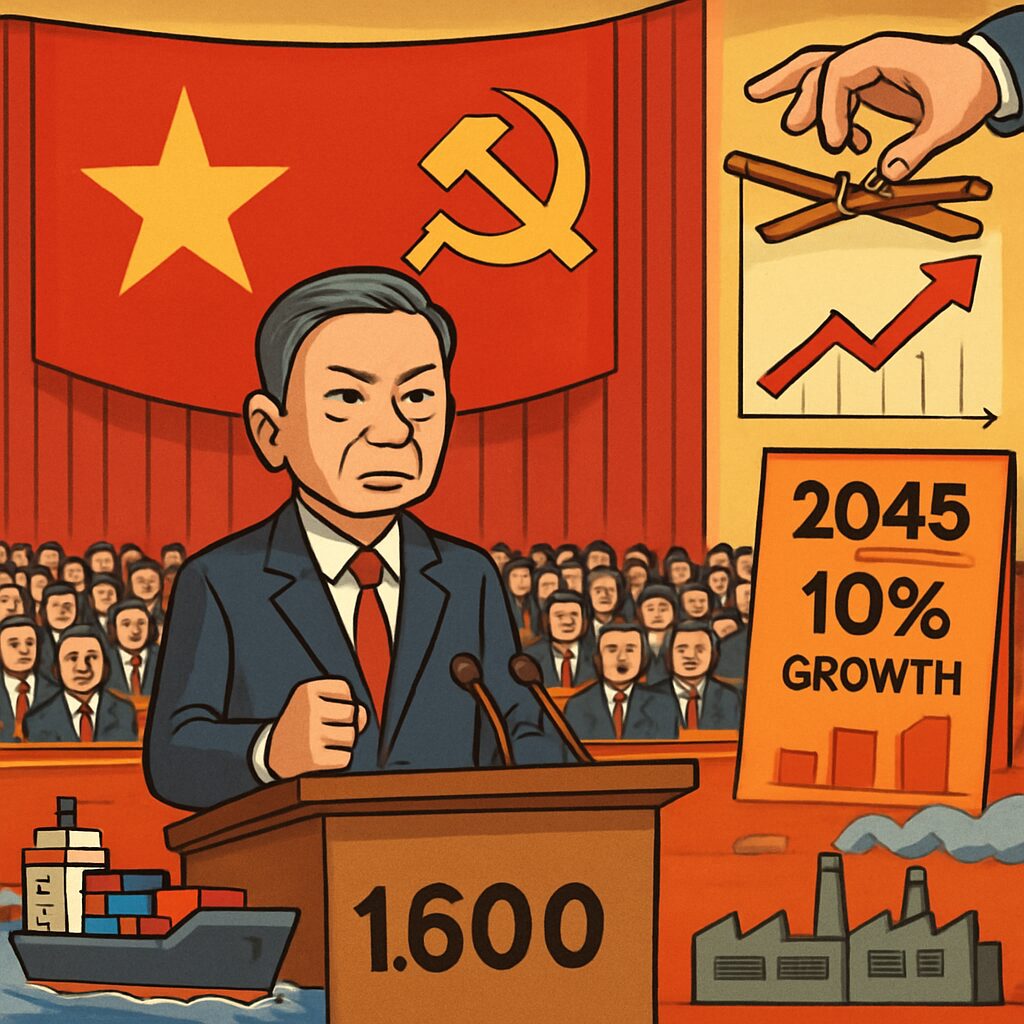
Vietnam’s ruling Communist Party has convened its five-yearly congress to select new leaders and set the country’s policy direction for the coming term. The meeting, which began recently, is a critical event for the one-party state, determining top positions including the general secretary, with current leader To Lam poised for re-election.
The congress brings together approximately 1,600 delegates who will approve key policy documents and elect a new Central Committee of about 200 members. From this committee, the Politburo and the general secretary will be chosen through a tightly controlled, non-competitive process, ensuring near-unanimous approval. The Vietnamese public has no direct role in these selections, highlighting the party’s centralized authority.
To Lam, who assumed the general secretary role in August 2024 following the death of his predecessor Nguyen Phu Trong, is the frontrunner for another term. A former police officer, Lam has positioned himself as a reformer, advocating for ambitious economic growth and declaring an “era of national rise” for Vietnam. His agenda includes transforming the country into an upper-income, knowledge-based economy by 2045.
Economically, Vietnam faces both opportunities and challenges. As the fastest-growing economy in Southeast Asia, it has benefited from export-led manufacturing and foreign investment, particularly as companies diversify supply chains away from China. However, persistent corruption, which has led to the ousting of two presidents, and potential U.S. tariffs under the Trump administration pose significant risks. Currently, tariffs on Vietnamese goods stand at 20%, yet exports to the U.S. hit a record high last year.
The government has set a steep economic target of 10% growth for 2026, a goal that observers deem ambitious but essential for maintaining the Communist Party’s legitimacy. Achieving this will require navigating global trade uncertainties and continuing reforms to attract investment. The policy continuity offered by the one-party system has been a key factor in Vietnam’s economic success so far.
In the coming days, the congress will conclude with the announcement of the new leadership on January 25, followed by Lam’s closing speech. Subsequently, legislative elections are scheduled for March 15, with the new National Assembly meeting in April to formally appoint senior leaders. This streamlined timeline aims to reduce the delay between leadership decisions and government formation.
Looking ahead, reports suggest that Lam may seek to merge the roles of general secretary and president into a single position, a move that could further consolidate power. While he has temporarily held both roles before, making it permanent would mark a significant shift in Vietnam’s political structure. The outcome of this congress will shape Vietnam’s domestic and foreign policies, impacting its trajectory as a rising regional power.

