

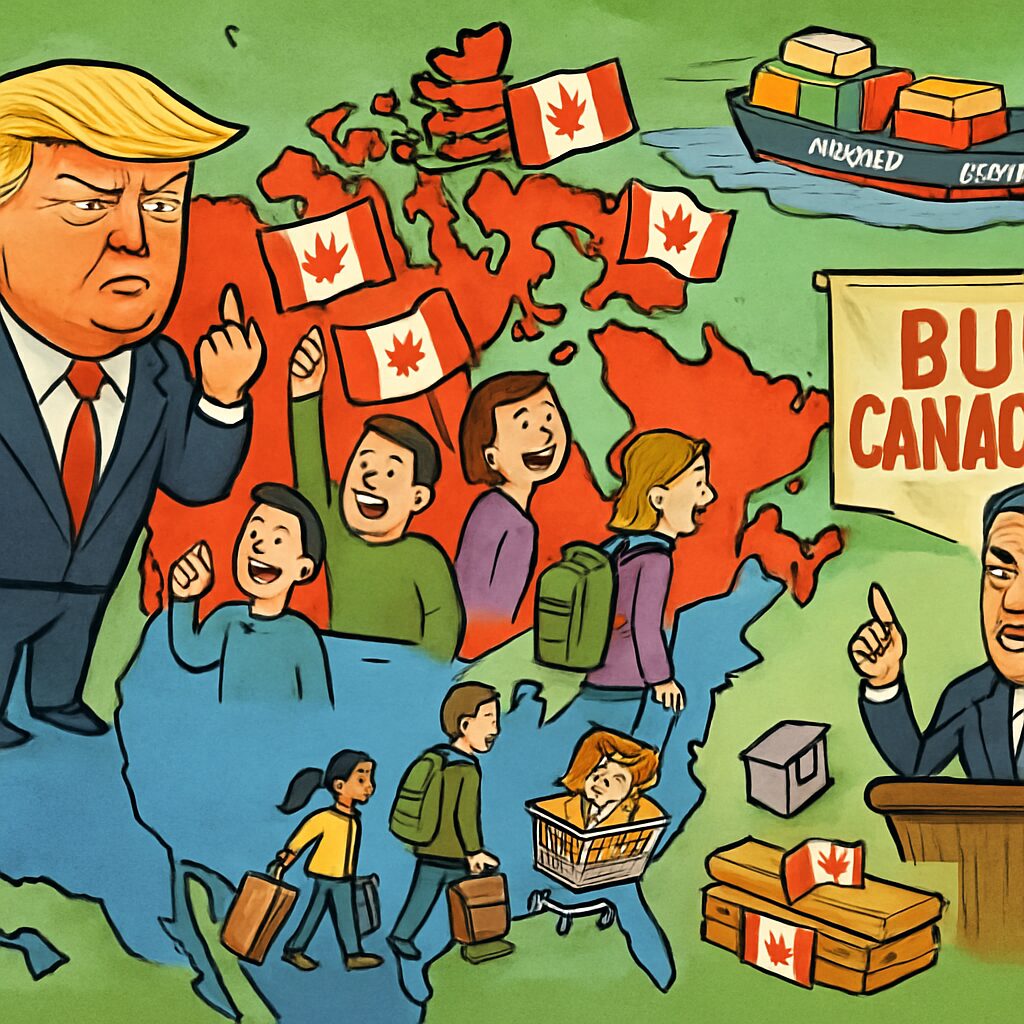
Executive summary: In the year since Donald Trump’s second inauguration as U.S. president, Canada has experienced a significant shift in public sentiment and behavior, marked by rising patriotism, reduced travel to the United States, and changing political dynamics. This has led to economic adjustments and a reevaluation of international alliances.
Over the past 12 months, Canadians’ attitudes towards their southern neighbour have soured dramatically. Polling data from the Pew Research Center indicates that 64% of Canadians now hold a negative view of the United States, the highest level in over two decades, with 77% lacking confidence in Trump as president. This sentiment has translated into tangible actions, such as a more than 25% decline in trips to the U.S. according to Statistics Canada, resulting in an estimated $5.7 billion loss for the American tourism industry.
The backlash has extended to consumer behavior, with Canadians increasingly opting for local products and alternatives from countries like Mexico. For instance, imports of U.S. spirits dropped sharply, and vehicle imports from Mexico surpassed those from the U.S. for the first time, as reported by industry data. The federal government has encouraged this shift through ‘Buy Canadian’ initiatives, particularly in sectors hit by Trump’s tariffs on steel and lumber.
Politically, Trump’s impact upended Canada’s federal election. Initially facing a collapse, the Liberal Party saw a resurgence under new leader Mark Carney, who capitalized on voter anxiety about sovereignty and the economy. Carney’s emphasis on standing up to Trump helped secure a comeback victory in late April, as confirmed by Reuters coverage, though without a majority government.
In response to the strained U.S. relationship, Canada has actively sought new trade partners. Carney recently visited China, announcing a deal to reduce tariffs and increase market access, marking a significant thaw in relations. Additional trips to India, the UAE, and European countries underscore Canada’s pivot towards diversifying its economic alliances, as detailed in multiple news reports.
The domestic tourism sector has benefited from the decline in U.S. travel, with record-breaking revenues during the summer months, according to Destination Canada. Meanwhile, the political landscape remains fluid, with Carney’s Liberals maintaining a narrow lead in polls, though the opposition Conservatives are gaining ground.
Looking ahead, Canada’s strategy appears focused on mitigating Trump’s unpredictable policies by strengthening ties elsewhere while fostering domestic resilience. This shift reflects broader global trends where nations are reassessing dependencies in light of geopolitical tensions, with implications for future trade and diplomatic relations.

