

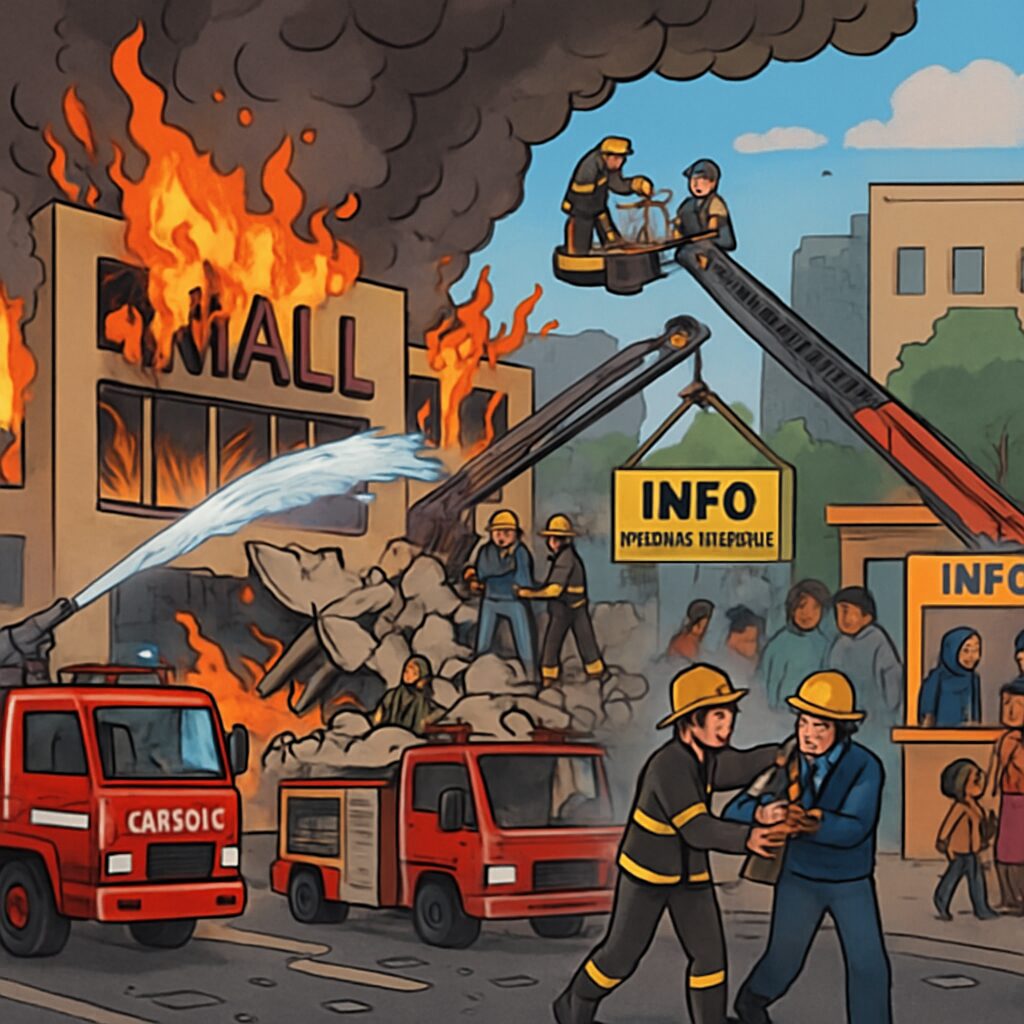
A massive fire at the Gul Plaza shopping center in Karachi, Pakistan, has killed at least 14 people and left dozens missing, with rescue operations hampered by the collapse of parts of the building. The blaze, which started on Saturday night, took over 24 hours to extinguish, highlighting critical fire safety concerns in the city’s commercial heart.
The inferno erupted late on January 18 at the multi-story Gul Plaza on MA Jinnah Road, a bustling hub housing around 1,200 shops. These outlets, selling clothing, electrical appliances, cosmetics, and other goods, contributed to the rapid spread of the flames due to the presence of highly flammable materials like plastic foam and perfumes. Eyewitnesses described the fire as uncontrollable from the outset, with shopkeepers unable to contain it using available extinguishers.
Firefighters battled the blaze for more than a day before managing to put it out, but the extensive damage has left sections of the building in ruins. Parts of the structure have collapsed, creating dangerous conditions for rescue teams who are working to locate survivors under the debris. The building is old and structurally unstable, forcing authorities to proceed with extreme caution during search operations.
As of Monday, January 19, the death toll has climbed to 14, including one firefighter who lost his life in the line of duty. Dozens of people remain unaccounted for, with estimates ranging from 58 to 80 missing based on reports from families and officials. Rescuers are using cranes to shift rubble and recover bodies, but they must wait for the site to cool down sufficiently to conduct thorough searches.
The scale of the tragedy has drawn high-level attention, with Sindh Provincial Governor Kamran Tessori visiting the scene to assess the situation. He confirmed that many are still missing and emphasized the challenges posed by the building’s instability. In response, Pakistan President Asif Ali Zardari expressed his condolences and called for a comprehensive review of safety arrangements in commercial and residential buildings across Sindh province.
Investigations into the cause of the fire are ongoing, but initial reports suggest it may have been fueled by electrical faults or other factors common in older structures with inadequate fire safety measures. The incident has exposed vulnerabilities in Karachi’s urban infrastructure, where rapid commercial growth has often outpaced regulatory enforcement and emergency preparedness.
Looking ahead, rescue efforts continue as teams work around the clock to find any remaining survivors and recover the deceased. Authorities have established a desk to register missing persons, providing a focal point for anxious families seeking information. The community is rallying support, but the focus remains on the immediate humanitarian response and ensuring such disasters are prevented in the future.
This fire serves as a stark reminder of the need for stringent fire safety protocols and regular inspections in densely populated commercial areas. It is likely to spur calls for policy changes and increased investment in emergency services to protect lives in Pakistan’s largest city.

