

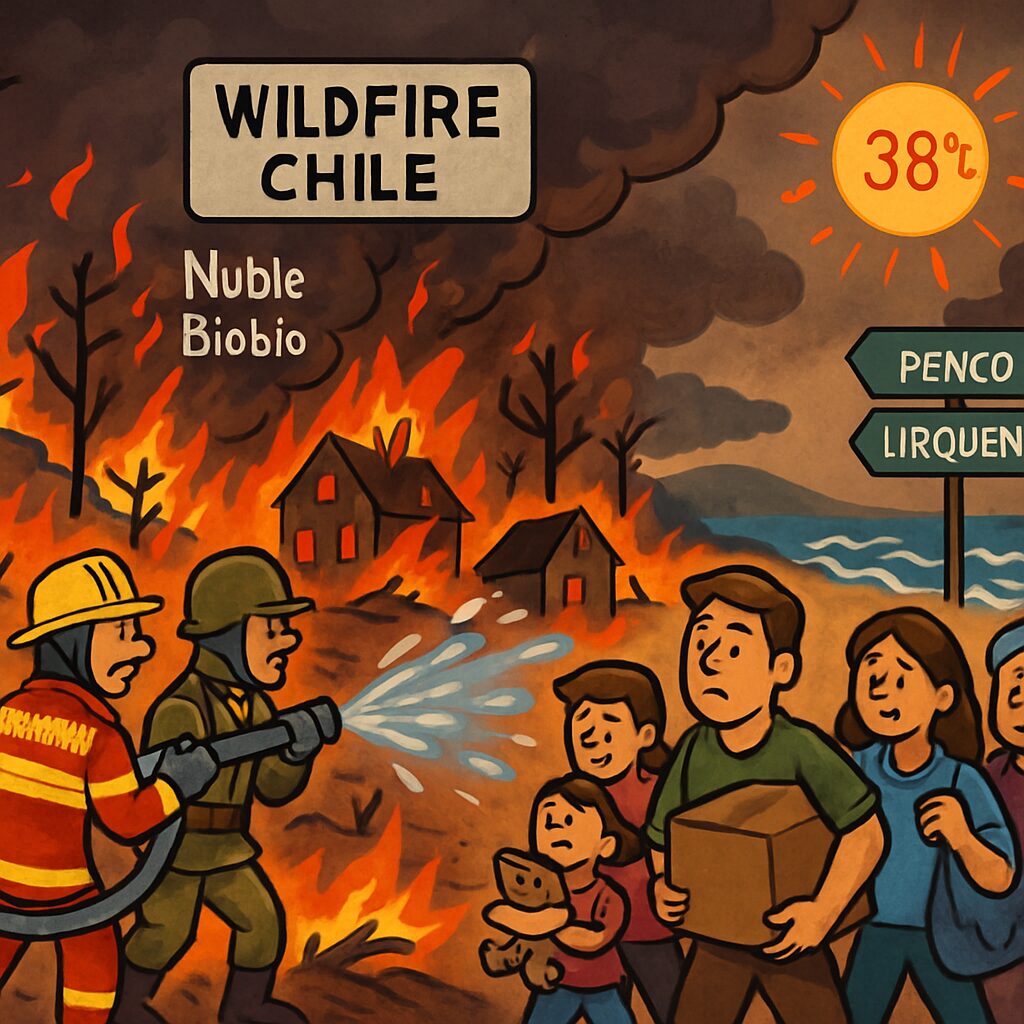
Chilean President Gabriel Boric has declared a state of catastrophe in the Ñuble and Biobío regions as devastating wildfires have killed at least 18 people and forced over 50,000 residents to evacuate. The fires, fueled by extreme heat and strong winds, have scorched thousands of hectares and destroyed hundreds of homes, with authorities warning that the death toll may rise.
The declaration, made on Sunday, allows for the deployment of military forces to assist in firefighting efforts across central and southern Chile. Boric emphasized that all available resources are being mobilized to combat the blazes, which have primarily affected areas around the coastal city of Concepción. The most severe impacts have been reported in towns like Penco and Lirquén, where rapid flames trapped residents overnight.
At least 18 fatalities have been confirmed, with most occurring in Penco. Charred bodies were found in homes, along roads, and in vehicles, highlighting the swift and deadly nature of the fires. Over 50,000 people have been evacuated, many fleeing to beaches or other safe zones with minimal belongings, as the fires consumed their communities.
Firefighters are battling 24 active fires nationwide, but efforts are hampered by strong winds and temperatures exceeding 38°C (100°F). Local officials, such as Penco Mayor Rodrigo Vera, have criticized the federal response, citing delays in military assistance and a lack of immediate support during the crisis.
Chile is experiencing a severe heatwave, with heat alerts in place from Santiago to Biobío. The country has faced prolonged drought conditions, which, combined with climate change, have increased the frequency and intensity of wildfires in recent years. This environmental context exacerbates the current disaster.
This incident echoes past tragedies; two years ago, forest fires in the Valparaíso region killed over 120 people. Such recurring events underscore the need for improved disaster preparedness and long-term strategies to address climate-related risks in Chile.
Under the state of catastrophe, authorities are prioritizing evacuations and fire containment. However, with forecasts predicting continued high temperatures, the situation remains critical. Firefighters and military personnel are working tirelessly to control the blazes and prevent further loss of life and property.
The wildfires highlight the urgent challenge of climate-related disasters in Chile and the importance of robust emergency response systems. As communities grapple with the aftermath, the nation faces the ongoing threat of such events, calling for enhanced resilience and international cooperation in disaster management.

