

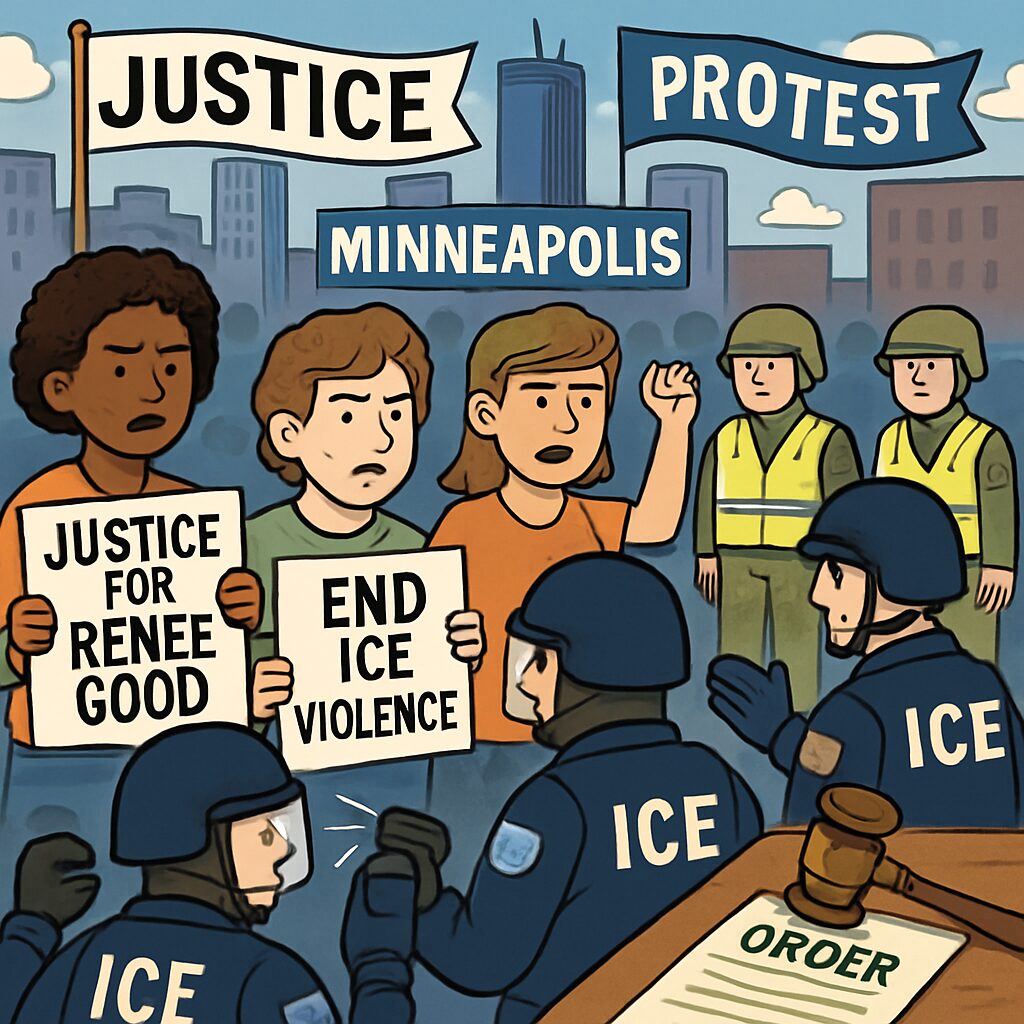
In a significant ruling, a US federal judge has imposed restrictions on how Immigration and Customs Enforcement agents can respond to protests in Minneapolis, prohibiting arrests and the use of pepper spray against peaceful demonstrators. This decision comes amid ongoing tensions following the fatal shooting of a local mother by an ICE agent earlier this month.
Judge Katherine Menendez issued the 83-page order on Friday night, barring federal agents from arresting or using nonlethal munitions such as pepper spray on individuals engaged in “peaceful and unobstructive” protest activity. The ruling, which stems from a lawsuit filed by protesters in December, also limits agents from stopping vehicles without reasonable suspicion of obstruction. Judge Menendez emphasized that safely following agents at a distance does not justify a stop, aiming to protect protesters’ rights while allowing law enforcement to perform their duties.
The protests in Minneapolis were triggered by the January 7 shooting of Renee Good, a mother-of-three, by an ICE agent. Her death sparked widespread demonstrations across the city, with participants demanding accountability and an end to aggressive immigration enforcement. Over the past week, there have been reported clashes between protesters and federal officers, heightening concerns about public safety and civil liberties.
In response to the escalating situation, Minnesota Governor Tim Walz has mobilized the state National Guard, placing troops on standby to assist local law enforcement. The Guard has indicated that members will wear high-visibility vests to distinguish themselves from other agencies. Additionally, the US Department of Homeland Security stated it is taking “appropriate and constitutional measures” to protect officers from what it described as “dangerous rioters,” underscoring the tension between federal and state authorities.
The White House has criticized the judge’s ruling, with spokesperson Abigail Jackson calling it “absurd” and accusing it of embracing a “left-wing narrative.” Meanwhile, the US Justice Department has launched an investigation into Governor Walz and Minneapolis Mayor Jacob Frey for allegedly attempting to impede federal immigration operations. Both officials have condemned the ICE actions, with Walz labeling the investigation as an “authoritarian tactic.”
Further complicating the situation, a US defence official revealed that approximately 1,500 active-duty soldiers from the 11th Airborne Division in Alaska are on standby for possible deployment to Minneapolis. This option remains under consideration if former President Donald Trump, who has threatened to invoke the Insurrection Act, decides to use military personnel. The potential deployment highlights the national significance of the protests and the political divisions surrounding immigration policy.
As planned weekend protests approach, city officials have urged demonstrators to remain orderly and peaceful. The judge’s order is expected to shape the dynamics of these gatherings, providing a legal framework that limits federal intervention while aiming to prevent violence. However, with counter-protests also being organized, the situation remains fluid and could test the boundaries of the new restrictions.
The ruling and its aftermath reflect broader debates over immigration enforcement and protest rights in the United States. Legal experts suggest that the case may set precedents for how federal agencies interact with civil demonstrations, particularly in contexts where immigration issues are contentious. As Minneapolis braces for continued unrest, the focus will be on whether the restrictions are upheld and how all parties adapt to the evolving legal landscape.

