

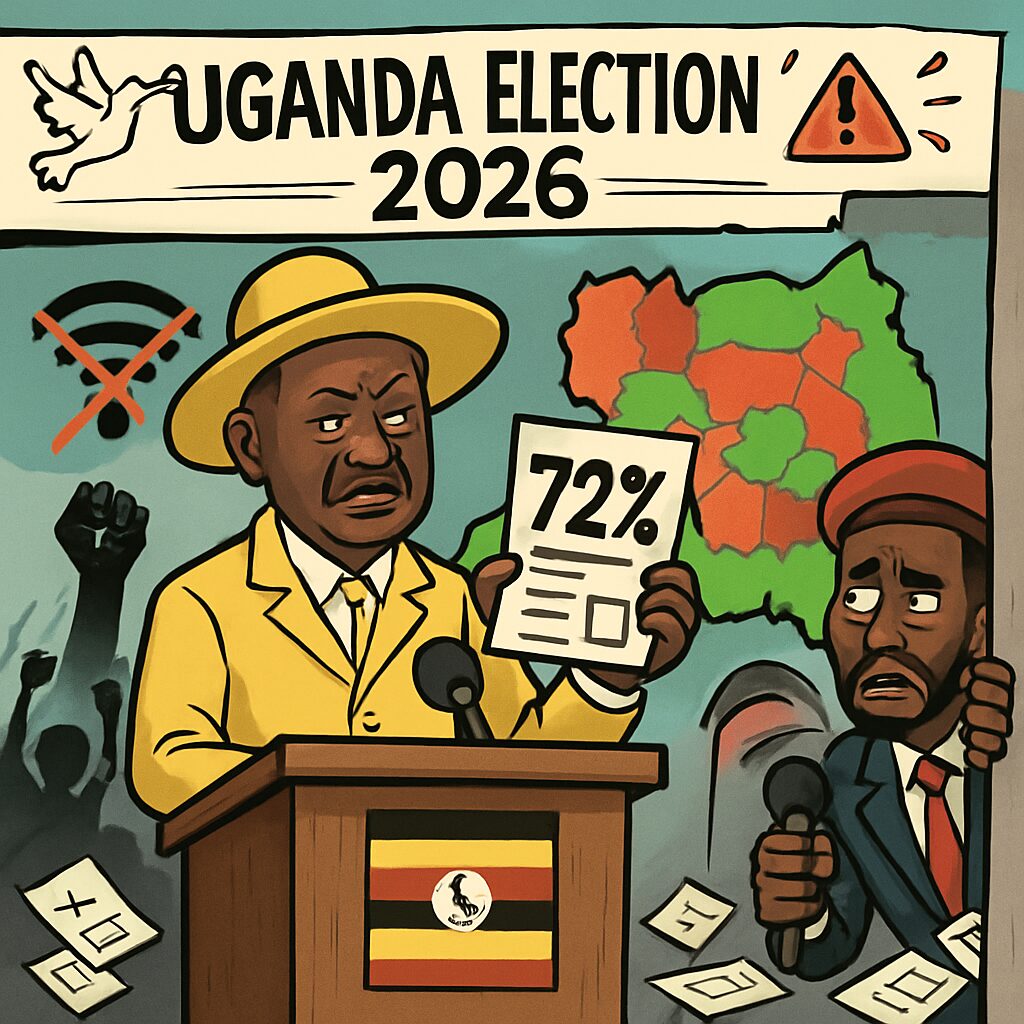
Uganda’s President Yoweri Museveni has secured a seventh term in office, extending his four-decade rule after a contested election that has been marred by allegations of fraud and violence. The main opposition leader, Bobi Wine, has rejected the results and is in hiding, accusing authorities of manipulating the vote.
President Yoweri Museveni was declared the winner of Uganda’s presidential election with approximately 72% of the vote, according to the electoral commission. His closest challenger, pop star-turned-politician Bobi Wine, received about 25% of the vote. The election, held on January 15, 2026, saw Museveni, who first came to power in 1986, continue his unprecedented grip on the East African nation.
The opposition has vehemently disputed the results, with Bobi Wine condemning what he called ‘fake results’ and ‘ballot stuffing.’ However, African Union election observers stated they saw no evidence of ballot stuffing, though they expressed concerns over the electoral process. Wine has called for non-violent protests and demanded a transparent investigation into the allegations.
Violence has overshadowed the election period, with reports of at least 21 deaths according to the opposition, though authorities have confirmed seven fatalities. The government imposed an internet blackout starting Tuesday, citing the need to prevent misinformation and incitement of violence. This move has been criticized by the United Nations and other international bodies as restricting freedom of information.
Bobi Wine’s situation has added to the turmoil, as he claims to be in hiding after police raided his home. He alleged that security forces attempted to abduct him, and his family remains under house arrest. Police have denied these allegations, stating that restrictions were placed for security reasons. Wine’s whereabouts are currently unknown, heightening tensions.
International observers, including a mission led by Nigeria’s former President Goodluck Jonathan, have raised alarms about the election environment. They highlighted intimidation, arrests, and the internet shutdown as factors that eroded public trust. The African Union called for the restoration of internet access and urged all parties to embrace peace and unity.
The election results have significant implications for Uganda, a country with a young population where most people are under 30 and have only known Museveni as president. During the campaign, Wine appealed to the youth with promises of reform and anti-corruption measures, while Museveni positioned himself as a stabilizer in a nation with a history of conflict.
Looking ahead, the legitimacy of Museveni’s extended rule is likely to be challenged both domestically and internationally. The opposition’s refusal to accept the outcome could lead to prolonged unrest, and the international community may increase pressure for democratic reforms. Uganda’s future stability hinges on how the government addresses the grievances and ensures inclusive governance.

