

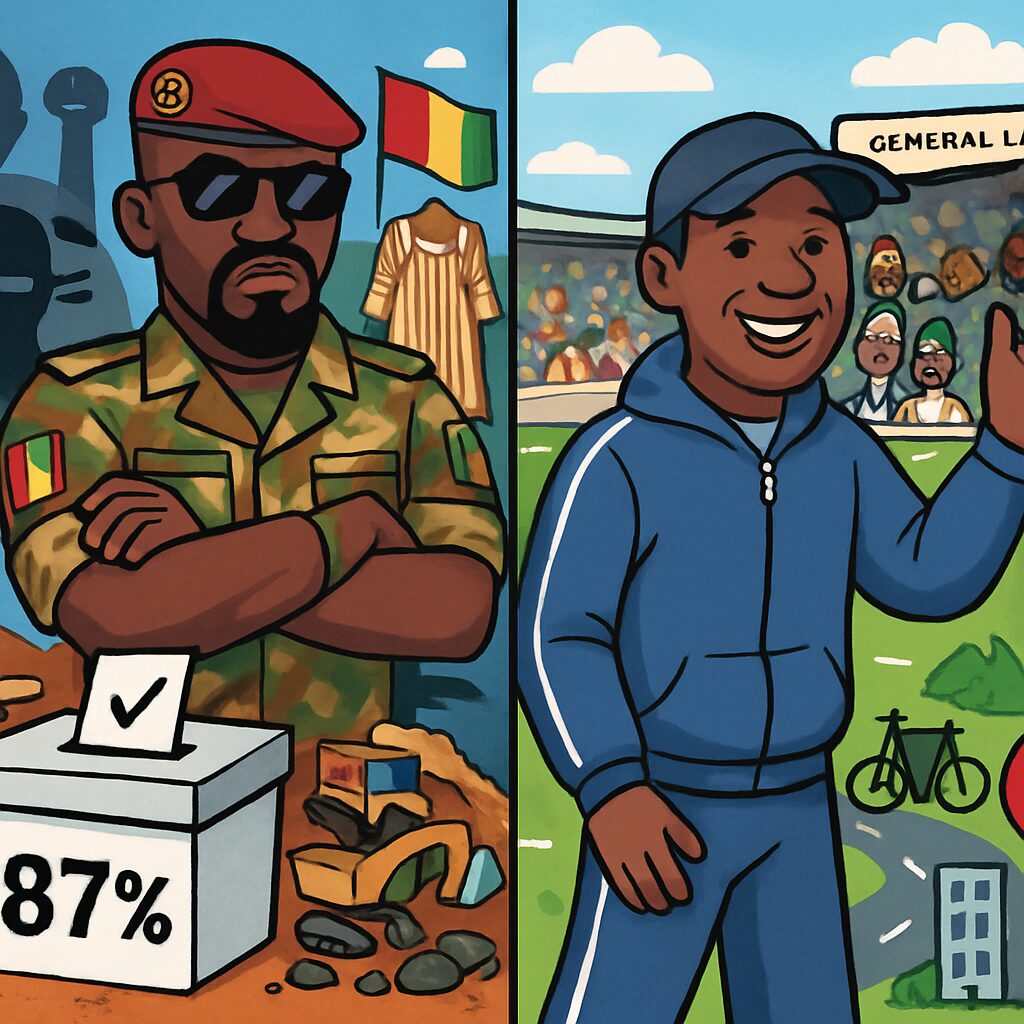
Mamadi Doumbouya, Guinea’s junta leader, was sworn in as the country’s civilian president on January 17, 2026, following a landslide election victory that critics have denounced as unfair. This marks a significant transition for the West African nation, where Doumbouya has promised to prioritize national sovereignty and economic development despite concerns over democratic backsliding.
Doumbouya first rose to power in September 2021 when he led a military coup that ousted then-83-year-old President Alpha Condé, citing corruption and the trampling of democratic principles. At the time, the broad-shouldered colonel, just 36 years old, struck an imposing figure in military fatigues and a red beret, declaring his intent to restore order. After more than four years as interim president, he reversed an initial promise not to seek election, submitting his candidacy for the December 2025 presidential poll.
The election, Guinea’s first since the coup, saw Doumbouya win 87% of the vote against a depleted field, with the Supreme Court later confirming 86.7%. However, the process was marred by an opposition boycott, with key challengers like ex-Prime Minister Cellou Dalein Diallo in exile, calling it a “charade” that produced “fabricated” results. Critics argue that the vote lacked fairness due to banned political parties and restricted civil liberties, undermining its credibility.
The swearing-in ceremony took place on Saturday at the General Lansana Conte Stadium in Conakry, attended by tens of thousands of supporters and several African heads of state, including Rwanda’s Paul Kagame and Mali’s Assimi Goita. Doumbouya, dressed in traditional Guinean robes, swore an oath to uphold the constitution, which had been altered to allow military leaders to run and extended presidential terms to seven years. The event symbolized his shift from military ruler to elected leader, with international observers from China, Nigeria, France, and the U.S. present.
Doumbouya’s image has evolved notably from camouflage to tracksuits and baseball caps, curating a more civilian-friendly persona through social media and public appearances. Analysts like Beverly Ochieng note this as an effort to distance himself from his coup origins and appeal to the people, though some, such as researcher Aïssatou Kanté, question the sincerity given ongoing military influence. His administration has emphasized action, showcasing infrastructure projects and cycling through Conakry to portray a hands-on leader.
Domestically, Doumbouya’s rule has faced criticism for cracking down on dissent, banning protests, and targeting opponents. Human rights campaigners report mysterious disappearances of activists like Oumar Sylla and Mamadou Billo Bah since July 2024, while media outlets have been shut down, leading to self-censorship among journalists. Despite this, Afrobarometer polls indicate growing public trust, from 46% in 2022 to 53% in 2024, suggesting residual popularity from the initially welcomed coup.
Economically, Doumbouya focuses on resource nationalism, leveraging Guinea’s vast natural resources, including the world’s largest bauxite reserves and the Simandou iron-ore project. He has canceled mining contracts deemed unfavorable, aiming to keep processing within Guinea to boost local benefits, a move praised by some as fighting for citizens’ rights. The Simandou deposits, with three billion tonnes of ore, began exports last month and could transform Guinea’s economy if managed effectively, with earnings pledged to infrastructure, health, and education.
Internationally, Doumbouya adopts a pragmatic stance, avoiding outright alignment with former colonial power France or Russia, unlike other West African junta leaders. His background includes education in France and service in the French Foreign Legion, but he emphasizes Guinean sovereignty, appealing to both regional and global partners. This balanced approach may help navigate diplomatic tensions within the Economic Community of West African States (ECOWAS), which has pressured for democratic returns.
Looking ahead, Doumbouya’s presidency will likely be defined by his ability to deliver on economic promises while addressing human rights concerns. The success of projects like Simandou could bolster his legitimacy, but persistent democratic deficits risk instability. As he ushers in this new era, the world watches whether his civilian garb translates to genuine governance or merely a cosmetic change in a nation grappling with poverty and political turmoil.

