

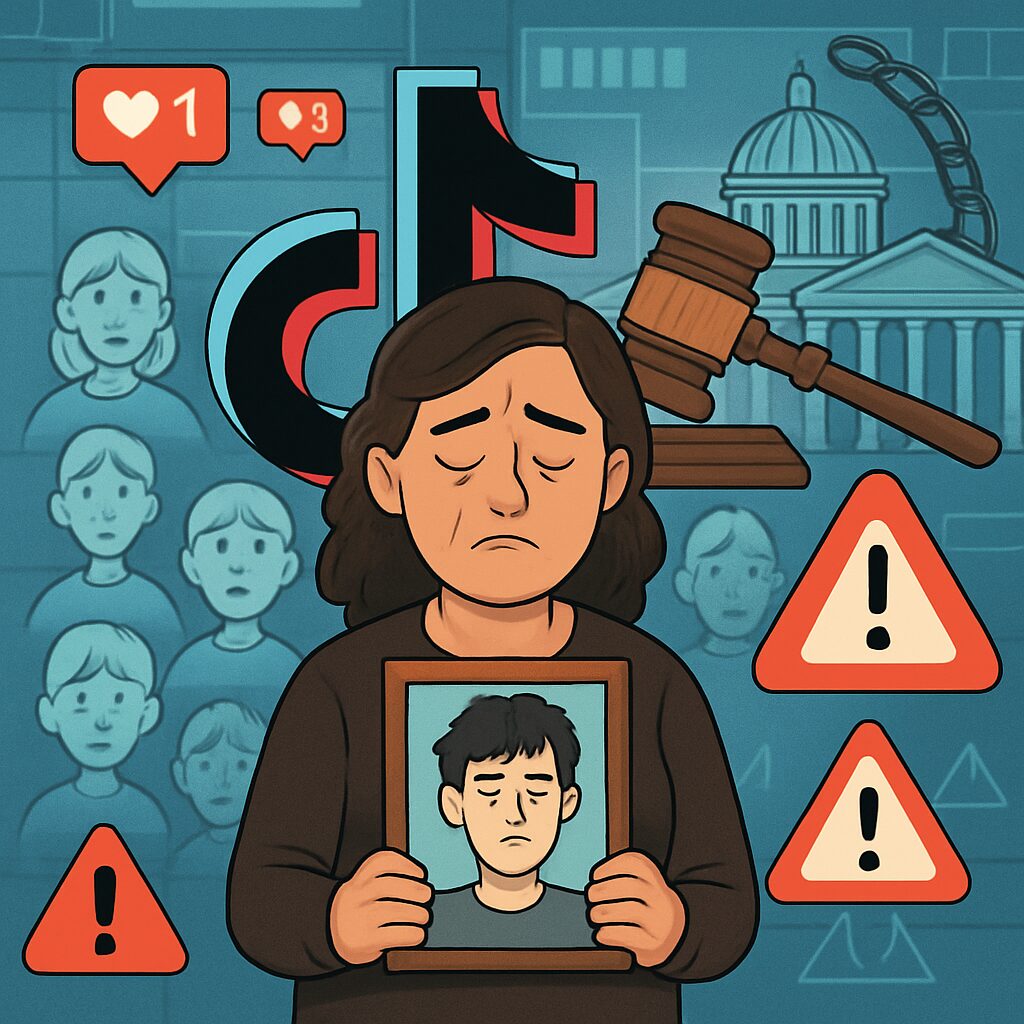
Ellen Roome, a mother from Gloucestershire, is leading a lawsuit against TikTok, seeking accountability for the death of her son and other children who allegedly died while attempting dangerous online challenges. This legal action highlights growing concerns about social media’s addictive design and its impact on youth safety, with the case filed in the U.S. aiming to compel transparency and responsibility from tech giants.
Roome’s 14-year-old son, Jools Sweeney, died in 2022, and while a coroner ruled out suicide, she believes his death was linked to an online challenge on TikTok. She has since campaigned for “Jools’ Law,” proposed legislation that would allow parents to access their deceased children’s social media accounts to investigate potential harmful content. Her efforts are part of a broader push for regulatory changes in how social media platforms handle user safety, especially for minors.
The lawsuit, filed by the Social Media Victims Law Centre in Delaware, includes four other British families whose children—Isaac Kenevan, Archie Battersbee, Noah Gibson, and Maia Walsh—also died under similar circumstances. The legal complaint argues that these deaths were foreseeable results of ByteDance’s engineered addiction-by-design, which intentionally maximizes child engagement on TikTok through risky or harmful content. This claim underscores the alleged systemic failures in content moderation and platform ethics.
Coroners’ inquests have provided mixed findings; for example, Archie Battersbee’s death was ruled accidental from a “prank or experiment,” with no evidence of an online challenge, while Isaac Kenevan’s was associated with a choke challenge. Maia Walsh’s inquest is pending and will examine her TikTok use, reflecting ongoing investigations into the role of social media in these tragedies. These varying outcomes highlight the complexities in attributing causation to online content.
TikTok has expressed sympathy for the families but defended its policies, stating it strictly prohibits content promoting dangerous behavior and removes 99% of such material proactively using robust detection systems. The company is seeking to dismiss the lawsuit, citing jurisdictional issues because the defendants are primarily based in the UK, and invoking U.S. law, including the First Amendment, which bars liability for third-party content. This legal stance sets up a significant battle over accountability and free speech.
The current hearing is a Motion to Dismiss, where TikTok aims to have the case thrown out, while Roome and her legal team argue for its validity, hoping to proceed to discovery. If successful, discovery would force TikTok to release data from the children’s accounts, potentially revealing what they viewed before their deaths. Roome emphasizes that the lawsuit is about accountability, not financial gain, seeking to understand her son’s online activity and hold platforms responsible.
Matthew Bergman, the founding attorney representing the parents, notes that online harm is a bipartisan issue, with potential for legislative and judicial actions to drive change. He believes that combining civil justice measures with public awareness can protect children from future risks, indicating a broader societal shift towards demanding corporate responsibility from social media companies. This case reflects increasing pressure on tech firms to address the real-world consequences of their algorithms.
As the legal proceedings continue, this lawsuit may set precedents for how social media platforms are regulated and held accountable, influencing global policies on digital safety. It underscores the urgent need for ethical design and transparent content moderation, with implications for future lawsuits and regulatory frameworks aimed at safeguarding vulnerable users in the digital age.

