

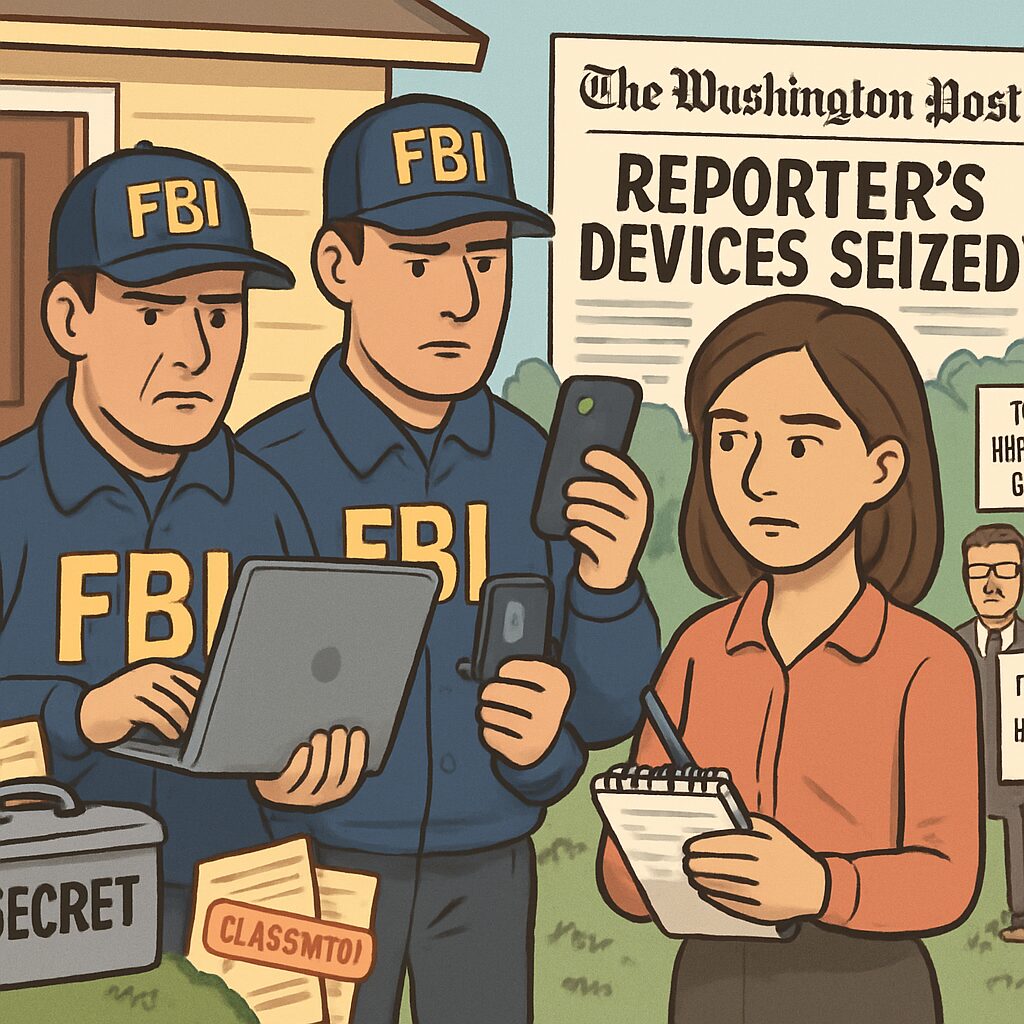
FBI agents executed a search warrant at the Virginia home of Washington Post reporter Hannah Natanson on Wednesday, seizing electronic devices as part of a leak investigation into a government contractor accused of retaining classified documents. The action has sparked alarm among press freedom advocates who view it as an aggressive move that could chill investigative journalism.
On Wednesday morning, federal agents arrived at Natanson’s home, where she was present, and confiscated her phone, personal and work laptops, and a Garmin watch. The Washington Post reported that Natanson was informed she is not the target of the investigation, which centers on Aurelio Perez-Lugones, a system administrator with top-secret clearance working as a contractor for the Pentagon.
Perez-Lugones, employed since 2002, is charged with unlawful retention of national defense information after authorities found classified documents, including one marked ‘SECRET’ in a lunchbox, during searches of his car and Maryland home earlier this month. Court filings indicate he accessed and printed sensitive reports but do not allege he disseminated the information. He is scheduled to appear in court on Thursday for a detention hearing.
Natanson has been covering the Trump administration’s efforts to reshape the federal workforce, and in recent work, she described gathering information from hundreds of sources within government agencies. The investigation appears to probe whether she obtained classified information from Perez-Lugones, though no charges have been filed against her, and the Post emphasized that she and the newspaper are not targets.
Attorney General Pam Bondi stated that the search was conducted at the Defense Department’s request and that the journalist was “obtaining and reporting classified and illegally leaked information.” White House press secretary Karoline Leavitt echoed this, emphasizing President Trump’s zero-tolerance policy for leaks that endanger national security and the safety of military personnel.
The Washington Post’s executive editor, Matt Murray, expressed deep concern, calling the search “extraordinary and aggressive” and highlighting constitutional protections for press work. First Amendment groups, including the Reporters Committee for Freedom of the Press, warned that such actions could deter vital reporting and undermine democratic accountability, noting that physical searches of journalists’ homes are among the most invasive steps law enforcement can take.
In April, Bondi rescinded Biden-era protections that shielded journalists from having phone records seized in leak probes, signaling a tougher stance on unauthorized disclosures. This search marks an escalation, contrasting with past approaches where similar incidents were handled with more restraint, such as a previous Signal chat disclosure that did not lead to an investigation.
The episode raises profound questions about the balance between national security and First Amendment rights, setting a precedent that may influence future leak investigations and the relationship between the media and the government. As Perez-Lugones faces legal proceedings, the Justice Department’s actions will likely face further scrutiny, highlighting ongoing tensions in upholding both security and press freedoms.

