

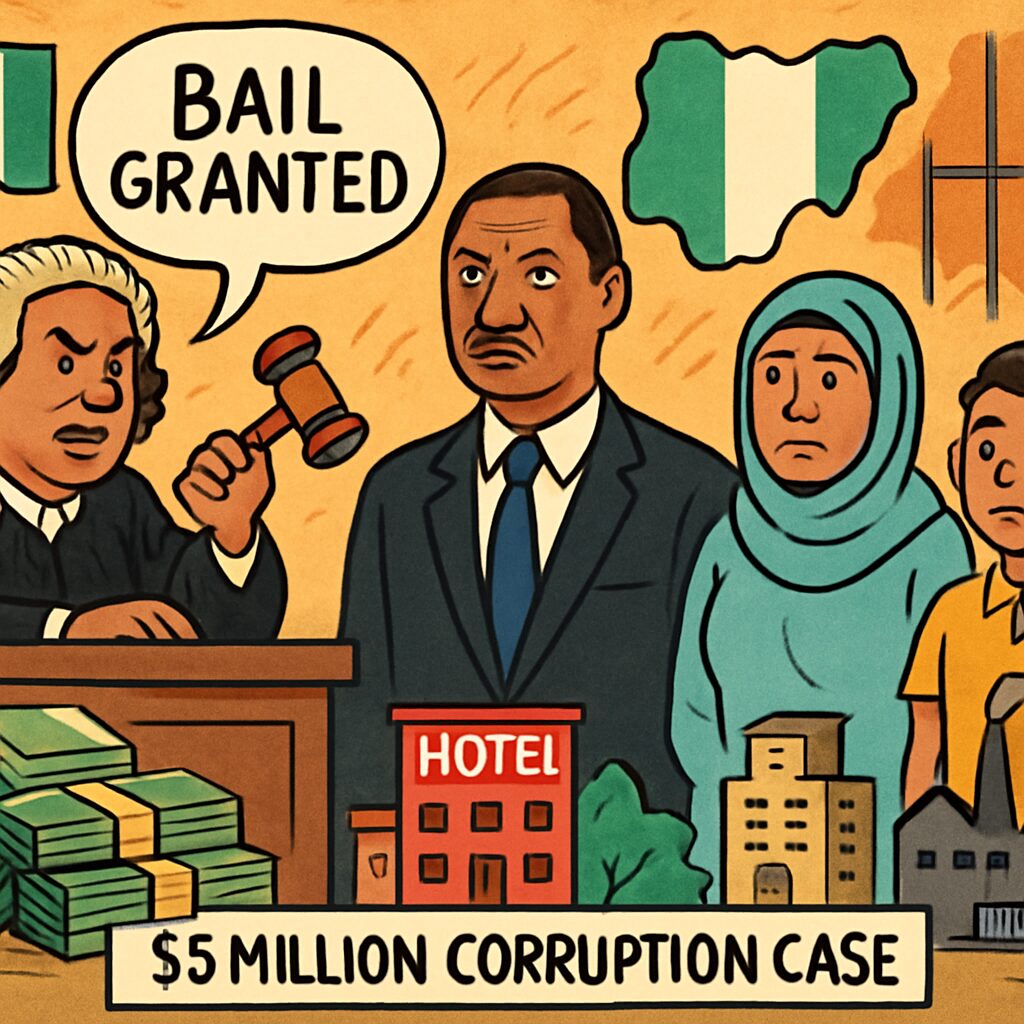
A Nigerian court has granted bail to former attorney general and justice minister Abubakar Malami in a $6 million corruption case, along with his wife and son, following their arrest last month on money laundering charges. The decision, made on January 7, 2026, allows their temporary release under strict conditions as they await trial.
Malami, 58, was charged with 16 counts of money laundering and abuse of office, involving 8.7 billion naira (approximately $6 million). He was arrested on December 30, 2025, and has been held in Kuje prison since then. In court, he pleaded not guilty to all charges, previously describing his arrest as politically motivated due to his recent defection from the ruling All Progressives Congress to the opposition African Democratic Congress.
Presiding judge Emeka Nwite ruled that the charges were bailable offenses and set bail at 500 million naira (about $350,000) for each defendant. Additionally, they must provide two guarantors who own property in designated areas of Abuja and surrender their travel documents to the court. These conditions aim to ensure their presence for the ongoing legal proceedings.
As a key figure in former President Muhammadu Buhari’s administration from 2015 to 2023, Malami wielded significant influence and is married to Buhari’s third child, Nana Hadiza. His prosecution is part of a broader crackdown on corruption within the Buhari government, which has seen several ministers facing similar allegations, including former aviation minister Hadi Sirika.
The Economic and Financial Crimes Commission (EFCC) alleges that Malami used his office to divert government funds, which were then used to acquire a vast portfolio of properties across Nigeria. The EFCC recently released a list of high-value assets linked to him, including hotels, residential buildings, schools, factories, land parcels, and a printing press in Abuja, Kebbi, and Kano states.
The scale of the alleged properties has sparked a national debate about the wealth of Nigeria’s politicians, highlighting concerns over corruption and accountability. Political analyst Idris Adamu noted that the case surprised many due to Malami’s perceived invulnerability, signaling that “no-one is above the law, even if you are the former justice minister of a country.”
The trial is scheduled to begin on February 17, 2025, and is closely watched as a test of Nigeria’s judicial system and anti-corruption efforts. Malami’s defense is expected to argue the political nature of the charges, while the EFCC will present evidence of financial misconduct.
This case underscores the challenges in combating corruption in Nigeria, where high-profile prosecutions often intersect with political rivalries. The outcome could influence public trust in governance and set precedents for future anti-corruption cases in the country.

