

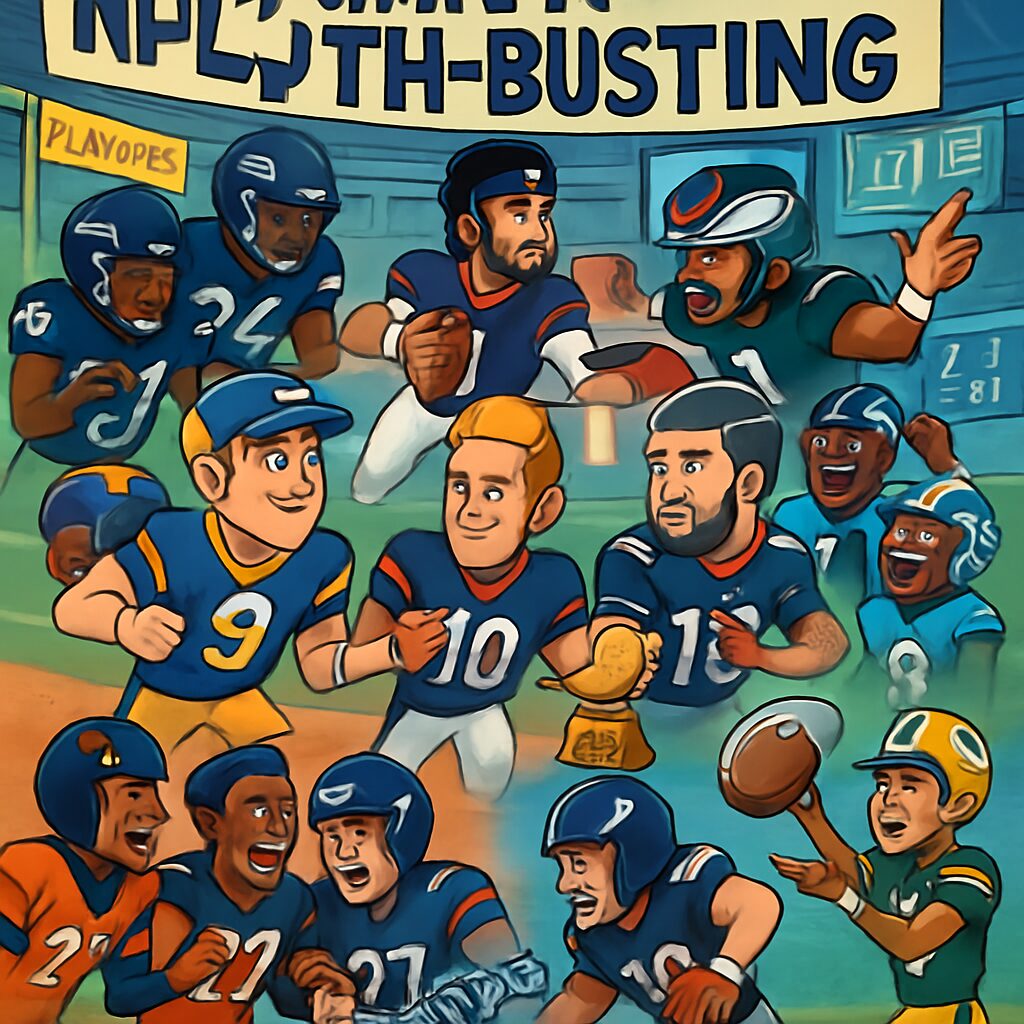
As the NFL playoffs commence, a detailed analysis by ESPN and TSN debunks prevalent myths about each of the 14 postseason teams, revealing that many common assumptions are flawed. This insight offers a nuanced perspective on team strengths and weaknesses just as the critical games begin.
For the Seattle Seahawks, the belief that their run game is inadequate is countered by second-half improvements, with running backs Kenneth Walker III and Zach Charbonnet ranking fourth in rush EPA from Weeks 10-18. Similarly, the Chicago Bears’ Caleb Williams, despite a low completion percentage, excels at avoiding negative plays, leading the NFL in throwaways and showing elite pressure management.
In the NFC, the Philadelphia Eagles’ success hinges more on quarterback Jalen Hurts than on Saquon Barkley, with Hurts’ performance metrics like QBR and touchdown-to-interception ratio sharply diverging in wins versus losses. The Carolina Panthers, despite an 8-9 record, have proven capable of upsets, as seen in their Week 13 victory over the Los Angeles Rams, and historical data supports .500 teams winning wild-card games.
The MVP race between the Rams’ Matthew Stafford and Patriots’ Drake Maye is clarified by advanced stats: Maye’s league-leading Total QBR, which adjusts for opponent quality, indicates he had a superior season overall. For the San Francisco 49ers, Christian McCaffrey’s 2025 output, while substantial in volume, lags in efficiency compared to his 2023 campaign, with a drop in yards per carry and early-down production.
In the AFC, the Denver Broncos’ 11-2 record in close games is not mere luck but a cultivated trait, supported by historical trends where teams excelling in one-score contests often reach the Super Bowl. The New England Patriots’ run defense, though struggling late, was formidable early on, suggesting potential for playoff resilience if they revert to earlier form.
The Green Bay Packers benefit significantly from wide receiver Christian Watson’s presence, with quarterback Jordan Love’s QBR and efficiency metrics soaring when Watson plays, debunking the myth that they lack a true No. 1 receiver. Other teams like the Los Angeles Chargers and Buffalo Bills also have misunderstood dynamics, as detailed in the full analysis.
This comprehensive myth-busting underscores that playoff contenders often defy simplistic narratives, with hidden strengths and contextual weaknesses shaping their postseason prospects. As the games unfold, these insights encourage a more data-driven evaluation of each team’s chances.

