

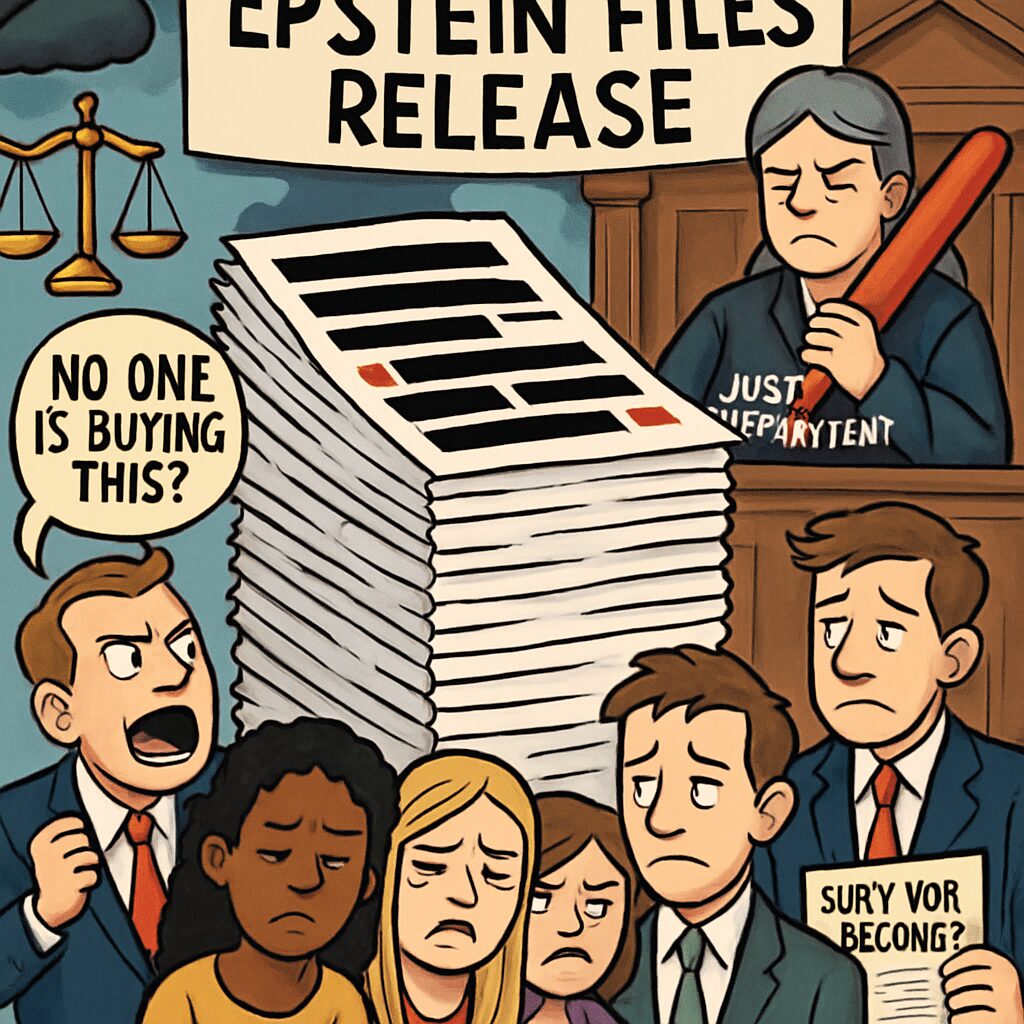
The Justice Department’s release of documents from the Jeffrey Epstein case has been significantly undermined by extensive redactions, sparking widespread criticism and calls for greater transparency. Rather than clarifying the long-controversial matter, the heavily censored files have fueled accusations of a coverup and dissatisfaction among survivors and lawmakers.
The documents were released under a new law passed by Congress on November 19, 2025, which mandated disclosure within 30 days. However, the Justice Department, led by Deputy Attorney General Todd Blanche, faced a tight deadline to vet hundreds of thousands of pages, assigning over 200 lawyers to the task. The result included entirely redacted pages and withheld key information, contrary to the law’s intent to provide clarity and settle public inquiries.
Survivors of Epstein, who died by suicide in 2019 while awaiting trial, have expressed frustration with the redactions. Helene Weiss, a lawyer representing some survivors, called the release “a complete mess,” noting that victims cannot search for relevant details in the documents. In one instance, a survivor who wished to remain anonymous had her name published, highlighting mishandling that has eroded trust in the process.
Politicians from both parties have criticized the DOJ’s approach. Republican Rep. Thomas Massie, who co-wrote the disclosure law, stated, “Nobody is buying this bogus Epstein release,” emphasizing that the redactions violate transparency requirements. The law allowed redactions only for specific reasons, such as protecting victims’ identities or national security, but the extent suggests overreach, with whole pages blacked out.
Interestingly, documents released early on December 23 contained numerous references to former President Donald Trump, which were not redacted. These included details about Trump’s plane travel with Epstein in the 1990s, though the DOJ labeled some claims as “untrue and sensationalized.” This selective transparency has raised questions about political motivations, though Blanche denied any bias, stating redactions were solely to protect individuals.
The DOJ has defended the redactions, citing the need to protect victims and adhere to legal privileges like attorney-client confidentiality. Blanche argued that releasing unredacted information would harm people, but critics point out that the law explicitly requires disclosure of deliberative process documents. Legal experts, such as Ryan Goodman of New York University, believe the DOJ’s justifications would not survive judicial scrutiny.
Moving forward, the Justice Department must submit a report to Congress justifying each redaction in the coming weeks. This ongoing scrutiny will test the administration’s commitment to transparency. The episode underscores the challenges of balancing privacy with public interest in high-profile cases, leaving many to question what remains hidden behind the blackouts and what it means for accountability in the Epstein saga.

