

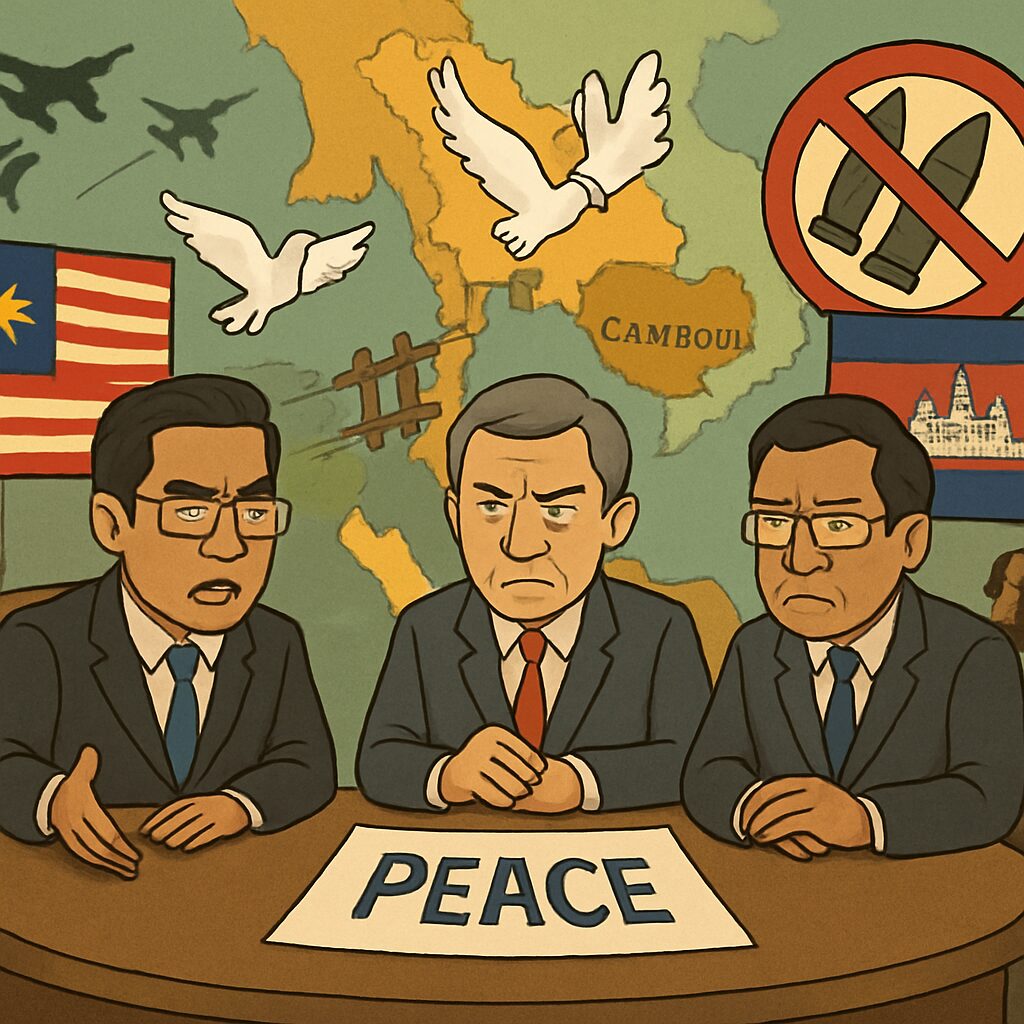
Southeast Asian foreign ministers gathered in Malaysia on December 22, 2025, in an urgent attempt to broker a ceasefire between Thailand and Cambodia, as renewed border clashes have killed over 40 people and displaced close to a million since fighting resumed on December 8. The meeting, convened by ASEAN chair Malaysia, aims to revive a July truce brokered with U.S. assistance and prevent further escalation in one of the bloc’s most severe internal conflicts.
The conflict between Thailand and Cambodia, rooted in century-old border disputes, flared up again this month after a fragile ceasefire collapsed. Both nations have traded blame for the hostilities, with Thailand accusing Cambodia of encroachment and Cambodia denouncing Thai aggression, including air strikes and artillery fire along their 800-kilometer border. The renewed violence has forced hundreds of thousands of civilians to flee their homes, creating a humanitarian crisis in the region.
At the ASEAN special foreign ministers’ meeting in Kuala Lumpur, Malaysian Foreign Minister Mohamad Hasan called for ‘our most urgent attention’ to de-escalate tensions and build trust between the parties. Thailand’s Foreign Minister Sihasak Phuangketkeow indicated that a meeting between military officials from both countries is scheduled for December 24, which must precede any ceasefire agreement. Cambodia has expressed a commitment to peaceful resolution, while Thailand has set conditions, including a unilateral ceasefire declaration from Cambodia.
The diplomatic efforts come amid fresh clashes that erupted hours before the ASEAN gathering, underscoring the challenges of achieving peace. Cambodian authorities reported Thai F-16 fighter jets dropping bombs and firing ‘toxic gas,’ while Thailand cited Cambodian artillery shelling damaging homes. These incidents highlight the volatility of the situation and the need for immediate intervention to prevent further loss of life and displacement.
International actors, including the United States and China, have been actively involved in mediation. U.S. Secretary of State Marco Rubio expressed hope for a new ceasefire by early this week, and China’s special envoy Deng Xijun recently visited Phnom Penh to facilitate dialogue. However, both countries’ efforts have yet to yield a breakthrough, with Bangkok and Phnom Penh continuing to accuse each other of violating past agreements.
The failure to contain this conflict poses a significant test for ASEAN’s credibility as a regional peacemaker. Since its founding in 1967, the bloc has rarely faced such intense fighting between member states, and the ongoing crisis threatens to undermine its role in maintaining stability in Southeast Asia. Malaysian Prime Minister Anwar Ibrahim, who presided over the July ceasefire, remains ‘cautiously optimistic’ but emphasized the imperative for both sides to secure peace.
Looking ahead, the success of the ASEAN initiative hinges on the upcoming military talks and the willingness of Thailand and Cambodia to compromise. The bloc plans to present satellite-monitoring data from the U.S. to aid in verification, but lasting peace will require sustained dialogue and confidence-building measures. As the conflict drags on, the humanitarian toll continues to rise, making a swift resolution critical for the well-being of affected communities and regional security.

