

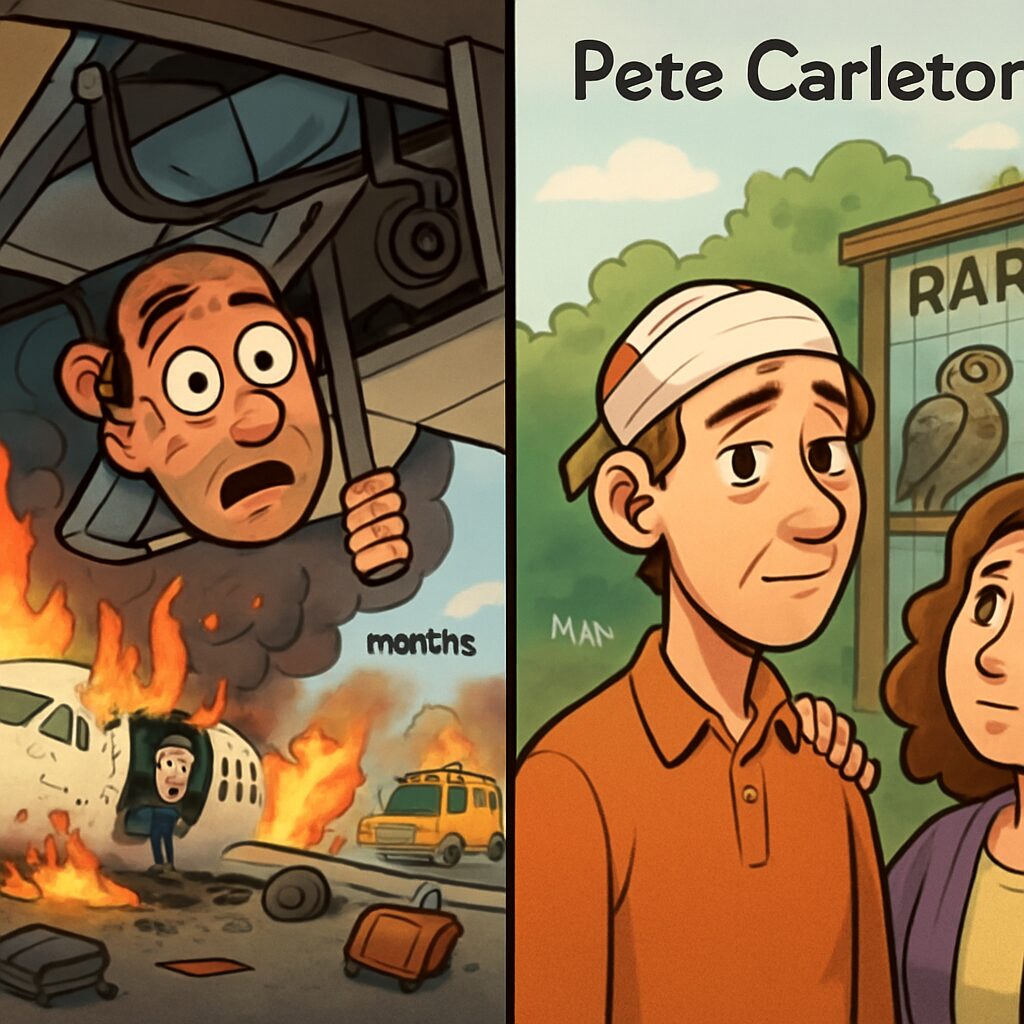
Pete Carleton, a Minnesota frequent flyer, miraculously survived the fiery crash of a Delta Air Lines plane that overturned upon landing in Toronto ten months ago, but the trauma has profoundly altered his life, leaving him with lasting fears, physical changes, and a renewed sense of purpose. On February 17, 2025, Carleton was aboard Delta Connection flight 4819 from Minneapolis to Toronto when the aircraft’s main landing gear support failed during approach, causing it to skid down the runway, break apart, and flip upside down, with all 80 passengers and crew surviving despite the severity of the incident. Hanging from his seatbelt in the inverted cabin, Carleton witnessed flames outside his window before the right wing detached, endured a violent impact that banged his head against the side, and later helped others navigate through spilled jet fuel and fallen luggage to escape just before an explosion occurred. After emerging drenched in fuel and losing his phone, medication, and baggage, Carleton was shuttled to a terminal where he was met by police, EMTs, Delta personnel, and clergy, all while coping with the pungent smell and a mix of shock and camaraderie among survivors. In the aftermath, Carleton experienced acts of kindness, such as a stranger paying for his meal and another providing clothing, and Delta offered $30,000 in cash to each passenger, though about 55 people, including Carleton through his attorney, are now involved in lawsuits against Endeavor Air and Delta related to the crash. Ten months later, Carleton faces ongoing challenges including panic attacks, hearing loss, speech changes, and a fear of flying exacerbated by winter weather that triggers memories of the crash, with his wife noting his altered behavior and the need for patience in their daily interactions. To manage his trauma, Carleton uses white noise to sleep, has flown only a few times while clutching his wife’s hand, and finds therapeutic relief in volunteering at a raptor center in Minneapolis, viewing it as a small step toward giving back with his second chance at life. Despite these efforts, Carleton acknowledges that the horrifying event will likely loom over him forever, and while grateful for survival, he grapples with existential questions about why he was spared and what he is meant to do, underscoring the long-term psychological impact of aviation disasters on individuals.
He walked away from the fiery crash of an overturned plane. Here’s how his life has changed


RELATED ARTICLES