

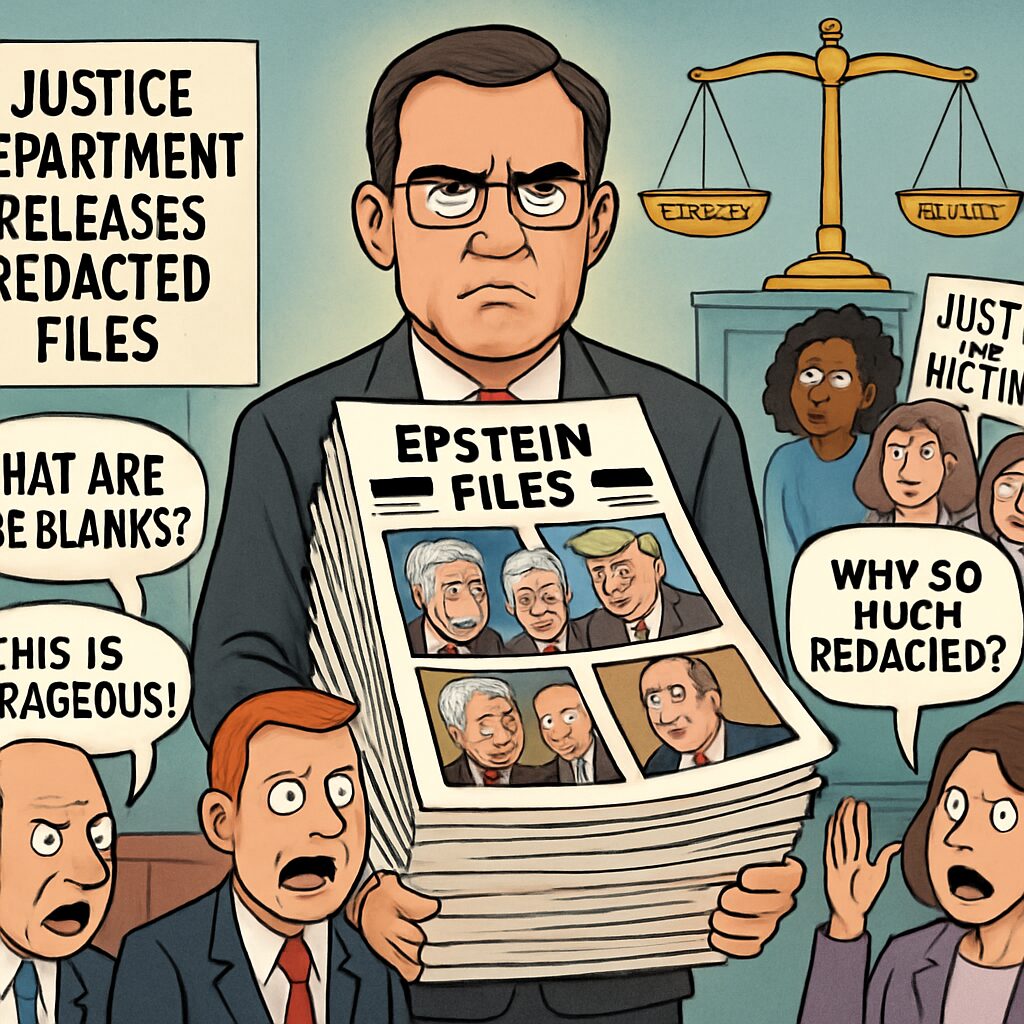
The U.S. Department of Justice began releasing thousands of documents and photos from the Jeffrey Epstein files on December 19, 2025, but the partial and heavily redacted release has drawn immediate criticism from lawmakers and advocates for failing to fully comply with transparency laws.
The initial release includes approximately 4,000 images and documents, featuring photos of high-profile individuals such as former President Bill Clinton, current President Donald Trump, and Britain’s Prince Andrew. Many of these images show the figures in social settings with Epstein, but they are often accompanied by redactions that obscure faces and context. For instance, over 500 pages were entirely blacked out, including a 119-page document labeled “Grand Jury-NY,” raising questions about what information is being withheld. The documents also include police reports detailing abuse allegations, such as one from 2006 where a teenage victim described being threatened by Epstein.
This release was mandated by the Epstein Files Transparency Act, which President Donald Trump signed into law in November 2025 after near-unanimous congressional approval. The law required all government files related to Epstein to be made public by December 19. However, Deputy Attorney General Todd Blanche acknowledged that not all documents were ready, citing the massive volume and the need to protect victims’ identities and ongoing investigations. He stated that the department would continue to release files on a rolling basis in the coming weeks, with over 200 Justice Department lawyers involved in the review process.
Democratic lawmakers have been vocal in their criticism. Senate Minority Leader Chuck Schumer called the release “a mountain of blacked out pages” that violates both the spirit and letter of the law. Representative Ro Khanna, who co-authored the transparency act, emphasized that the law requires explanations for every redaction, which were not provided. He and Republican Representative Thomas Massie are exploring legal options to enforce full compliance, including potential contempt of Congress or impeachment proceedings, accusing the DOJ of grossly failing to meet legal standards.
The Justice Department defended its actions, asserting that redactions were necessary to protect over 1,200 victims and their families identified during the review process. In a letter to Congress, Blanche explained that the department adhered to legal requirements by withholding personal identifying information and details that could compromise active investigations. The DOJ also noted that it did not redact the names of politicians unless they were victims, countering accusations of political bias, and highlighted efforts to maintain transparency while respecting legal boundaries.
Public reaction has been mixed, with Epstein survivors expressing frustration. Marina Lacerda, one of the alleged victims, called for the full release of files, stating that the current transparency efforts are insufficient. The White House, meanwhile, hailed the release as evidence of the Trump administration’s commitment to transparency, while simultaneously criticizing Democrats for their historical ties to Epstein. This political framing highlights the partisan divisions surrounding the case, with figures like Bill Clinton’s spokesman dismissing the focus on him as a distraction from others who maintained relationships with Epstein after his crimes were known.
The implications of this partial release extend beyond the immediate documents. It underscores ongoing challenges in balancing transparency with privacy and legal protections in high-profile criminal cases. The heavy redactions fuel speculation and conspiracy theories, potentially undermining public trust in government institutions. For Epstein’s victims, the delayed and incomplete disclosure may hinder their pursuit of justice and closure, as seen in calls from accusers for greater accountability and unredacted access to all materials.
Looking ahead, the Justice Department plans to release additional documents in the coming weeks, but pressure is mounting for a complete and unredacted disclosure. Lawmakers from both parties are likely to intensify their scrutiny, and legal battles may ensue to compel full compliance with the transparency act. The outcome will set a precedent for how similar cases are handled in the future, impacting accountability and victim rights in the American justice system, with ongoing debates over the extent of government transparency in sensitive investigations.

