

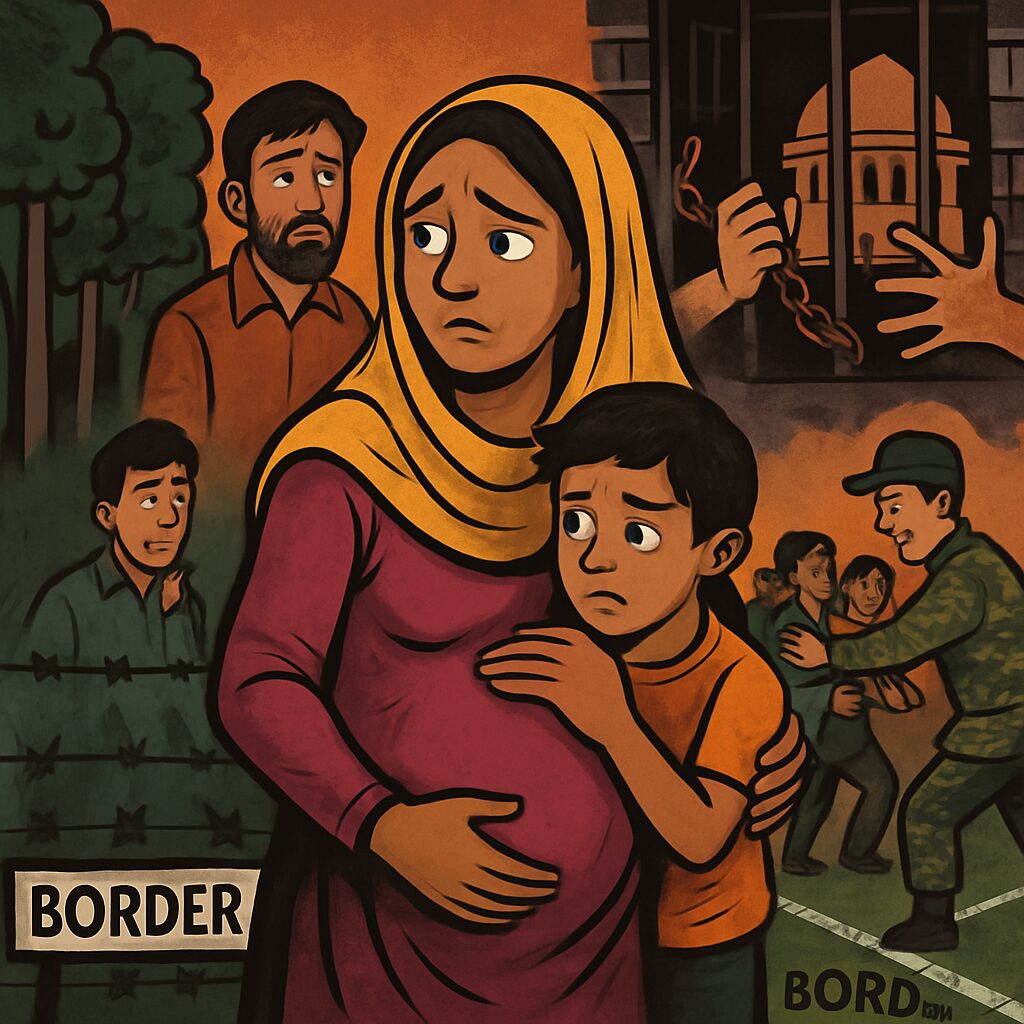
A pregnant Indian woman, Sunali Khatun, was wrongfully deported to Bangladesh and has recently returned after a Supreme Court order, exposing flaws in India’s immigration crackdowns and igniting political controversy. Her harrowing experience highlights the human toll of deportation policies targeting Bengali-speaking Muslims.
Sunali Khatun, a 25-year-old domestic worker from West Bengal, was detained in Delhi in June 2025 with her husband Danish Sheikh and their eight-year-old son on suspicion of being illegal immigrants. Despite insisting on their Indian citizenship, they were swiftly deported to Bangladesh, where authorities jailed them for unlawful entry. Khatun alleges that after a week in detention, they were flown to the border and pushed across by Border Security Force personnel into a dense forest in Bangladesh, leaving them stranded without food or water.
This incident is part of a broader crackdown on alleged Bangladeshi immigrants in India, which has seen hundreds detained and deported in recent months. While Delhi has not released official data, sources indicate over 1,200 people were pushed into Bangladesh in May alone. Rights activists argue these deportations disproportionately target Bengali-speaking Muslims and are conducted without due process, often bypassing protocols to verify claims with home states, as was the case with Khatun.
In Bangladesh, Khatun and her son endured more than 100 days in jail under harsh conditions. She described inadequate food for her pregnancy and a cell without a toilet, leading to fear and distress. Her husband was held separately and later released on bail, but remains in Bangladesh with a relative, while Khatun and her son have returned to India. The separation has torn their family apart, with their seven-year-old daughter left behind in India during the ordeal.
India’s Supreme Court intervened in December 2025, ordering the federal government to allow Khatun and her son to return on humanitarian grounds while her citizenship is investigated. She is now living with her parents in West Bengal, but faces an uncertain future with another child due in January. Her case continues to be heard by the Supreme Court, with ongoing legal battles to reunite her family and clarify her status.
The deportation has drawn sharp criticism from the West Bengal government, led by Chief Minister Mamata Banerjee, who accused the central BJP-led government of acting without cause. It has sparked national debate over immigration enforcement, with calls for greater accountability and procedural fairness. The incident underscores tensions between state and central authorities in India, particularly regarding the treatment of minority communities.
Looking ahead, Khatun’s story raises broader questions about the effectiveness and ethics of India’s deportation practices. As her case unfolds, it may prompt policy reviews and increased scrutiny of how suspected immigrants are handled, aiming to prevent similar injustices in the future.
The ordeal has resonated widely, shedding light on the vulnerabilities faced by migrant workers and the need for robust safeguards in immigration procedures. Khatun’s resilience and the legal support she has received offer a glimpse into ongoing struggles for justice in complex socio-political landscapes.

