

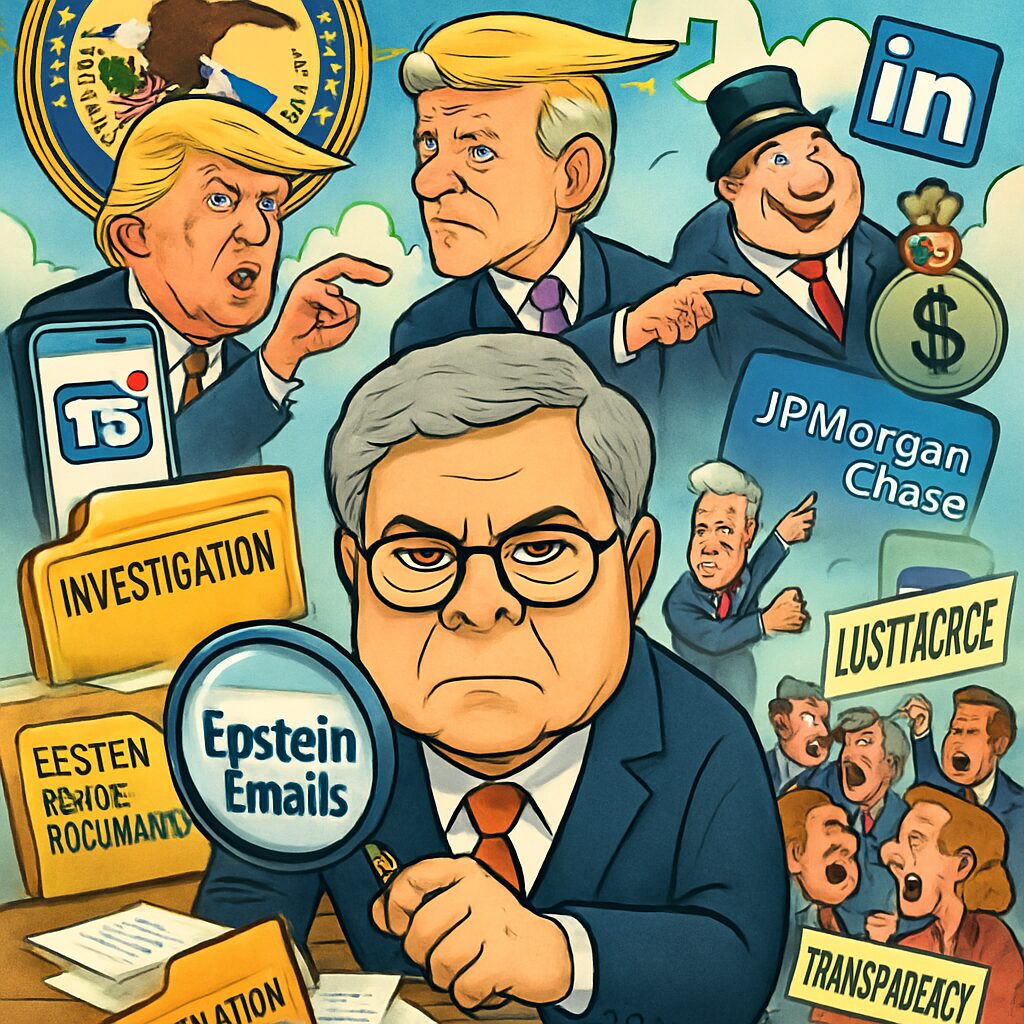
The US Justice Department has initiated an investigation into Jeffrey Epstein’s alleged connections to former President Bill Clinton and major financial institutions, following a request from President Donald Trump. This action coincides with the congressional release of thousands of Epstein’s emails, which have intensified political scrutiny over the associations of prominent figures with the convicted sex offender.
President Trump announced on his Truth Social platform that he would direct Attorney General Pam Bondi and the FBI to examine Epstein’s “involvement and relationship” with Clinton and others. Bondi promptly confirmed the investigation, emphasizing that it would be conducted with “urgency and integrity.” The justice department appointed US Attorney Jay Clayton to lead the probe, signaling a serious commitment to uncovering the truth behind these alleged ties.
The investigation extends beyond Clinton to include JPMorgan Chase, former Treasury Secretary Larry Summers, and LinkedIn founder Reid Hoffman, a notable Democratic donor. Trump asserted that Epstein was a “Democrat’s problem,” aiming to redirect attention from his own historical relationship with Epstein. A spokesperson for JPMorgan Chase expressed regret for any association with Epstein but denied involvement in his crimes, while Clinton has vehemently denied knowledge of Epstein’s illicit activities.
This development follows the House Oversight Committee’s release of more than 20,000 pages of documents from Epstein’s estate, which contain numerous references to Trump. Democrats, including Robert Garcia, have accused Trump of using the investigation as a diversion from serious questions about his own connections to Epstein. The emails reveal that Trump was mentioned in over 1,600 email threads, though he did not send or receive them, and include exchanges where Epstein discussed a victim spending time with Trump.
Trump has consistently denied any wrongdoing regarding Epstein, stating that their friendship ended in the early 2000s, years before Epstein’s first arrest. The release of these documents has reignited public and political interest in the case, with many viewing Trump’s request as an unusual step for a sitting president. Traditionally, administrations avoid directing justice departments to investigate specific individuals, often relying on independent special counsels for such matters.
Simultaneously, the House of Representatives is preparing for a vote on whether to release all justice department files related to Epstein, driven by a discharge petition that garnered bipartisan support. Survivors of Epstein’s abuse and the family of Virginia Giuffre have urged lawmakers to vote in favor of transparency, highlighting the importance of accountability for the victims. This vote, triggered by Democrat Adelita Grijalva’s swearing-in, represents a significant push for full disclosure.
Political repercussions are evident, as Trump recently withdrew his support for Republican congresswoman Marjorie Taylor Greene, who criticized his approach to the Epstein files. Greene, along with three other Republicans, joined Democrats in calling for the release of the documents, stating she stands with the women affected. This internal conflict within the GOP underscores the divisive nature of the Epstein case in contemporary American politics.
The ongoing investigation and document releases continue to underscore the far-reaching impact of Epstein’s crimes, with advocates emphasizing the need for justice and healing for survivors. As the probe progresses, it may reveal further details about the networks and individuals involved, potentially influencing future political dynamics and public perception.

