

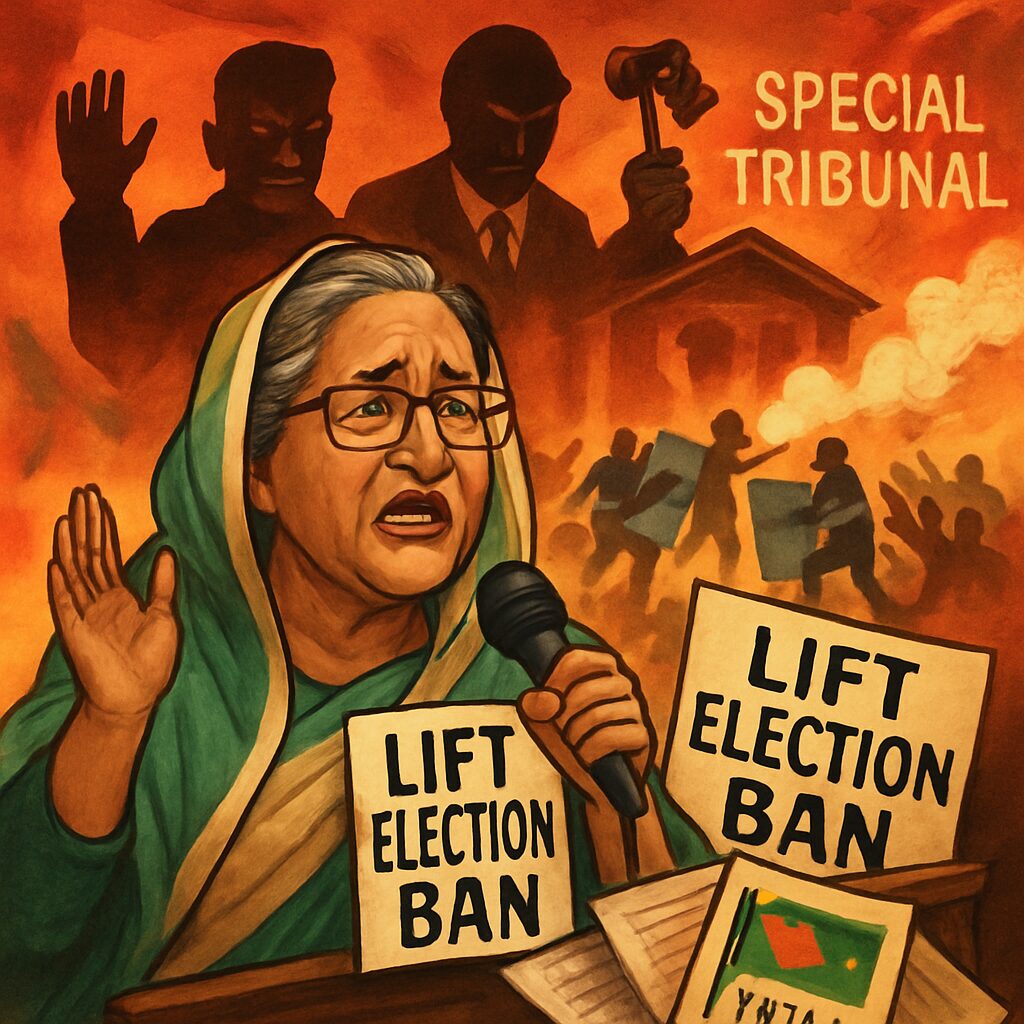
Bangladesh’s former prime minister Sheikh Hasina, charged with crimes against humanity, has called for the lifting of a ban on her political party ahead of upcoming elections. Speaking from exile in India, she denied the allegations against her as a special tribunal prepares to deliver a verdict that could include the death penalty.
Hasina is accused of being the main architect behind hundreds of killings during mass protests last year that forced her to flee the country. Prosecutors allege she personally ordered security forces to fire on unarmed civilians, an accusation she categorically denies. The trial is being conducted in her absence, as she has refused to return from India.
In written answers to the BBC, Hasina expressed hope that the election ban on her Awami League party would be lifted, stating that the party represents tens of millions of supporters who must not be disenfranchised. She emphasized that the Awami League remains a key part of Bangladesh’s political discourse, whether in government or opposition.
The former leader described her trial as a “farce” controlled by political opponents, claiming she has been unable to defend herself or appoint her own lawyers. Leaked audio evidence verified by the BBC suggests she authorized the use of “lethal weapons” during the protests, which was played in court. Hasina disputes the authenticity and context of the audio.
Along with Hasina, two other former officials are facing trial: ex-home minister Asaduzzaman Khan Kamal and ex-police chief Chowdhury Abdullah Al-Mamun. Prosecutors are seeking the death penalty for Kamal, who is in hiding, while Chowdhury has pleaded guilty but not yet been sentenced. Hasina’s lawyers have filed an urgent appeal with the UN, raising concerns about fair trial and due process.
Hasina also addressed other serious allegations, including the discovery of secret jails where critics were held without legal process and alleged extra-judicial killings during her rule. She denied any knowledge or involvement in these abuses, calling for any evidence to be examined in an impartial process. Additionally, she and other former government members are facing separate corruption charges, which they deny.
The verdict on Monday marks a critical moment for Bangladesh, affecting the families of those killed and the country’s political future. With elections scheduled for February 2026, the outcome could influence whether Hasina’s party can participate and how Bangladesh addresses its recent turbulent history.

