

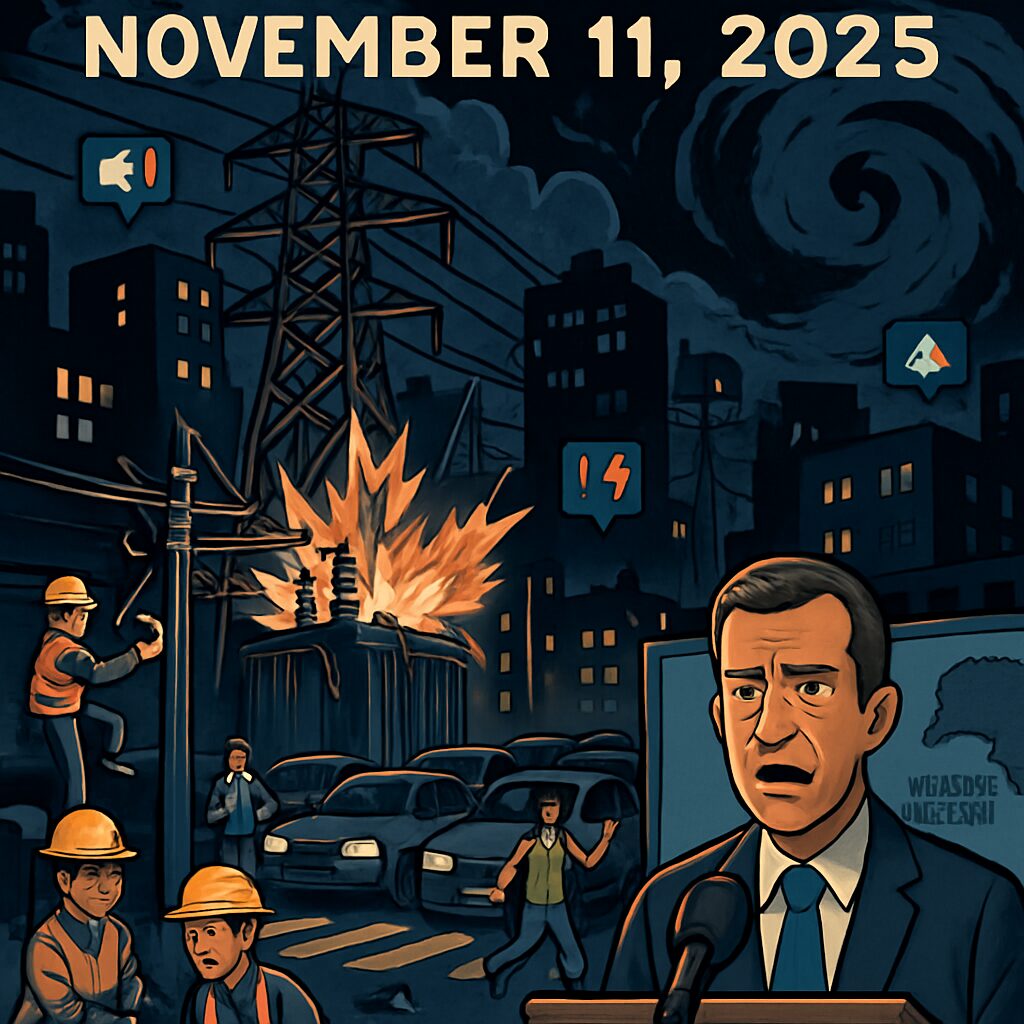
The Dominican Republic experienced a nationwide power outage on Tuesday, November 11, 2025, caused by a cascade of failures in the electricity transmission system, leading to widespread disruptions and urgent restoration efforts.
On Tuesday, November 11, 2025, the Dominican Republic was plunged into a complete nationwide blackout, described by officials as resulting from a ‘cascade of failures’ that began at approximately 13:23 local time (17:23 GMT). The outage affected the entire country of around 11 million people, halting critical infrastructure and daily activities. Initial reports highlighted chaos on roads and public transportation systems, with authorities quickly mobilizing to address the crisis and provide updates to the public.
Energy Minister Joel Santos Echeverría attributed the blackout to a failure at a key substation, which triggered shutdowns in generation units at two major power plants. This domino effect spread rapidly through the national grid, exposing vulnerabilities in the transmission system. The state-owned Dominican Electricity Transmission Company confirmed that the issue was isolated to the transmission network, but the interconnected nature of the grid led to the widespread collapse. The country had been experiencing smaller, localized blackouts in recent weeks, indicating pre-existing challenges in the energy sector.
Restoration efforts were launched immediately, with officials reporting that about 33% of the national power demand had been restored by Tuesday evening. Crews worked through the night to repair the substation and restart generation units, focusing on stabilizing the system and prioritizing essential services. The government held press conferences to reassure the public, emphasizing that full service resumption was a top priority and that updates would be provided regularly as progress was made.
The impact of the blackout was severe and immediate, disrupting public transportation including the metro and cable car in the capital, Santo Domingo, where passengers had to be evacuated. Traffic lights failed across cities, leading to gridlock and increased safety risks on roads. Social media users reported outages in various provinces, though some areas with backup generators maintained partial electricity and internet access, highlighting the uneven distribution of the crisis.
This incident occurs against a backdrop of recent natural disasters, such as Hurricane Melissa, which battered the Caribbean last month and was blamed for four deaths in Haiti and the Dominican Republic. The storm may have weakened infrastructure, contributing to the grid’s fragility. The Dominican Republic, a major tourist destination, shares the island of Hispaniola with Haiti, and both nations have faced chronic energy issues, underscoring the regional challenges in maintaining reliable power systems.
The nationwide outage raises serious questions about the resilience of the country’s aging energy infrastructure and the need for modernization to prevent future crises. Officials are expected to conduct a thorough investigation into the causes and response, with potential implications for policy reforms and investments in grid upgrades. As power is gradually restored, the event highlights the critical importance of reliable electricity for public safety, economic stability, and daily life, prompting calls for sustainable solutions to enhance energy security in the region.

