

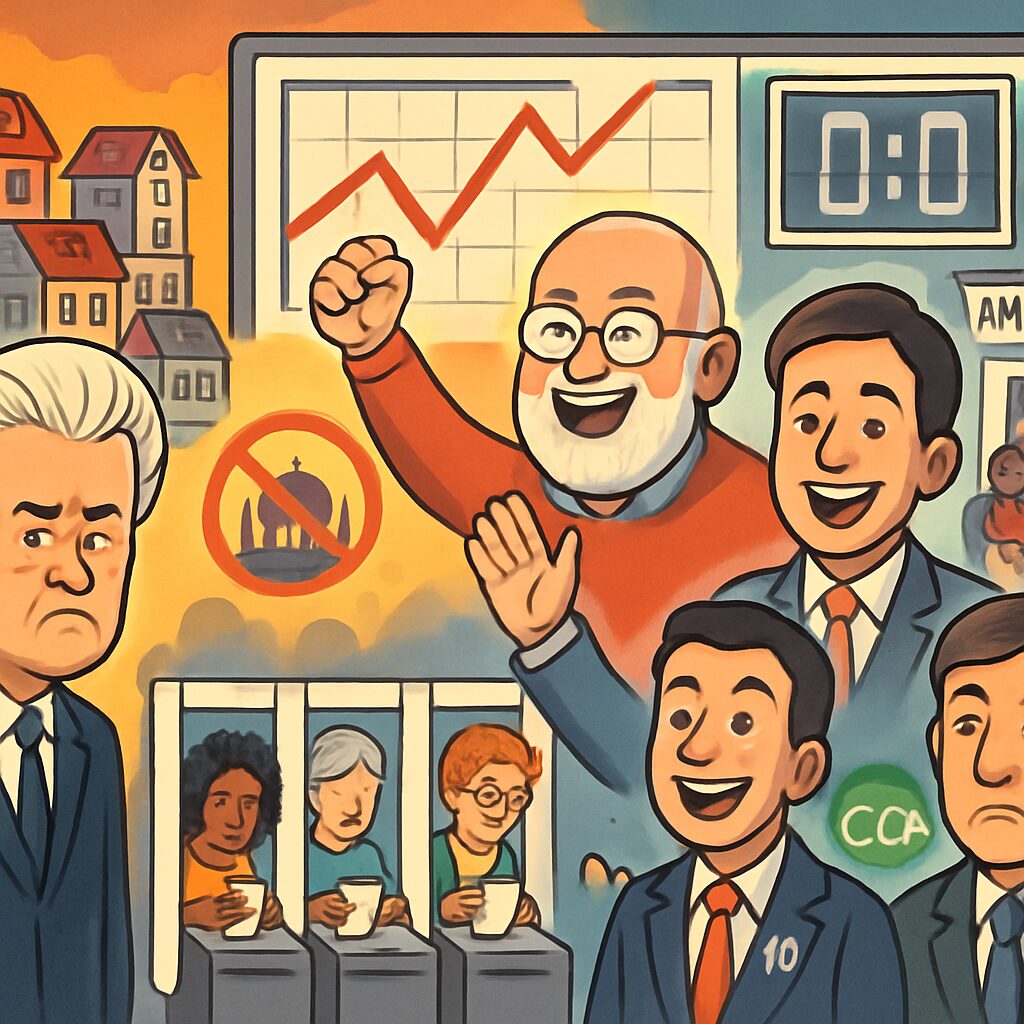

Dutch voters are casting ballots in a tightly contested election where anti-Islam populist Geert Wilders, who won the last poll, faces declining support and stiff competition from center-left and liberal parties. With key issues like housing shortages and immigration dominating the campaign, the outcome remains uncertain as polls suggest a close race.
The Netherlands is holding a pivotal election on Wednesday, October 29, 2025, with all 150 seats in the lower house of parliament up for grabs. Pre-election polls indicate a neck-and-neck contest between Geert Wilders’ far-right Party for Freedom (PVV) and the center-left alliance of the Labor Party and Green Left, led by Frans Timmermans. This election follows the collapse of the previous coalition government in June, which Wilders’ party was part of, after disputes over migration policy. The fragmentation of the political landscape means that forming a stable government will require complex negotiations among multiple parties.
Wilders, known for his anti-Islam rhetoric, secured a surprising victory in the November 2023 election but was blocked from becoming prime minister by coalition partners. Instead, a technocrat cabinet led by Dick Schoof was formed, but it lasted only 11 months before Wilders withdrew his support over disagreements on immigration controls. This history has made other parties wary of partnering with him, reducing his chances of forming a government even if his party wins the most votes. Analysts suggest that Wilders’ isolation could lead to a coalition excluding his PVV, regardless of the election results.
Key issues driving voter concerns include a chronic housing shortage, with nearly 400,000 homes needed in a country of 18 million people, rising cost of living, and overcrowded asylum centers. While Wilders has blamed migration for the housing crisis, opponents point to factors like increased single-person households and planning delays. Other parties have proposed solutions, such as Timmermans’ pledge to build 100,000 new homes annually and Rob Jetten of the liberal D66 party suggesting construction on agricultural land. Unemployment has also risen to 4%, the highest in four years, adding to economic anxieties.
The election features a fragmented political landscape, with up to 15 parties expected to win seats. Besides Wilders’ PVV and Timmermans’ GreenLeft-Labour, other significant contenders include the center-right Christian Democrats under Henri Bontenbal, who has advocated for a return to ‘boring politics,’ and the liberal D66 led by Rob Jetten. The conservative-liberal VVD, led by Dilan Yeşilgöz-Zegerius, is polling poorly after its role in the collapsed coalition. With over a third of voters undecided, the race is highly unpredictable, and commentators emphasize that who comes second could be crucial for coalition-building.
Wilders’ campaign has been marred by controversies, including an apology after two PVV MPs posted AI-generated images depicting Timmermans being arrested. Despite toning down some of his anti-Islam policies to appear more moderate—earning him the nickname ‘Milders’—Wilders still views Islam as a threat to Dutch freedom. However, analysts like Matthijs Rooduijn of the University of Amsterdam doubt he will be part of the next government, as he risks losing both radical and moderate voters to other anti-immigration parties like Ja21. His inability to secure broad support underscores the challenges of far-right politics in the Netherlands.
Voting is underway across more than 10,000 polling stations and will continue until 21:00 local time (20:00 GMT). The high number of undecided voters adds to the uncertainty, and exit polls are eagerly awaited to gauge the initial results. Coalition formation could take weeks or months, as parties negotiate based on shared priorities like housing, climate, and immigration. If the center-right gains traction, Bontenbal’s Christian Democrats might lead the government, marking a comeback from their poor showing in 2023.
The election outcome will not only shape Dutch politics but also signal trends in European populism, as the Netherlands grapples with restoring public trust after years of political instability. A shift toward centrist governance could reinforce EU cohesion on issues like climate and migration, while a strong far-right performance might inspire similar movements elsewhere. As votes are counted, the focus will turn to the arduous process of building a coalition that can address the nation’s pressing challenges.