

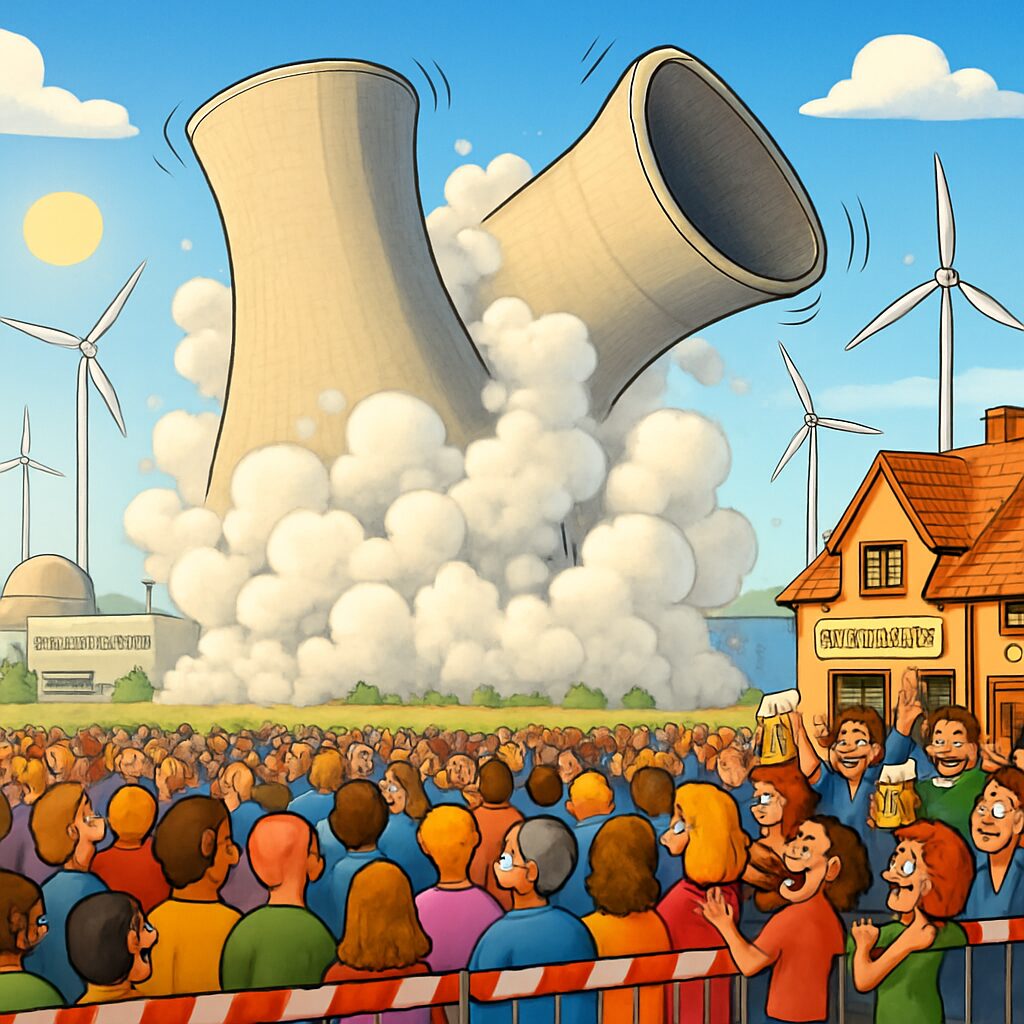

Two massive cooling towers at the decommissioned Gundremmingen nuclear power plant in Bavaria, Germany, collapsed during a controlled demolition on October 25, 2025, as part of the country’s nuclear phaseout strategy. The event drew thousands of spectators and symbolizes a key step in Germany’s energy transition.
The demolition occurred at noon local time, with explosives triggering the sequential collapse of the two towers. Thick clouds of white smoke and dust billowed into the air as the structures, each weighing approximately 28,000 tonnes, crumbled within seconds. The controlled implosion involved three explosions: the first to disperse nearby wildlife, followed by the sequential demolitions of the towers. This careful planning ensured minimal risk to the environment and public safety, with no hazardous materials released.
The Gundremmingen plant had been operational since the 1980s and was decommissioned in December 2021, along with the Brokdorf and Grohnde facilities, as part of Germany’s decision to phase out nuclear power. The plant was a significant local employer and economic driver for nearly four decades, making its closure a poignant moment for the community. The shift away from nuclear energy was accelerated after the Fukushima disaster in 2011, reinforcing national policies aimed at reducing nuclear reliance.
Germany’s Energiewende, or energy transition, seeks to replace nuclear and fossil fuels with renewable sources like wind and solar power. The demolition of the cooling towers is a visible milestone in this effort, with similar actions planned for other decommissioned plants. This policy has garnered support for its environmental benefits but has also faced criticism over costs and energy security concerns, particularly with increased imports.
Thousands of people gathered to witness the event, with local authorities setting up restricted zones and some pubs hosting viewing parties. The atmosphere was a mix of nostalgia and optimism, as residents reflected on the plant’s history while looking forward to a cleaner energy future. The community has been adapting to the economic changes since the plant’s closure, with some job losses offset by new opportunities in renewable sectors.
The demolition was managed by energy company RWE, which adhered to strict safety protocols. The total concrete weight of the towers was about 56,000 tonnes, underscoring the magnitude of the infrastructure removal. This operation demonstrated advanced demolition techniques that minimize environmental impact and ensure public safety, with the collapse contained within a designated area.
Following the tower demolitions, the dismantling of the entire plant will continue, with completion expected by 2040. This process includes decontaminating the site, removing remaining structures, and preparing the land for potential future uses, such as industrial development or renewable energy projects. The extended timeline highlights the complexities involved in nuclear decommissioning and site remediation.
This event highlights the broader challenges and opportunities of energy transitions worldwide. As nations address climate change and energy needs, Germany’s experience provides insights into managing the shift from nuclear power. The Gundremmingen demolition marks both an end to an era and a step toward sustainable energy, influencing similar efforts globally and underscoring the importance of balanced policy implementation.