

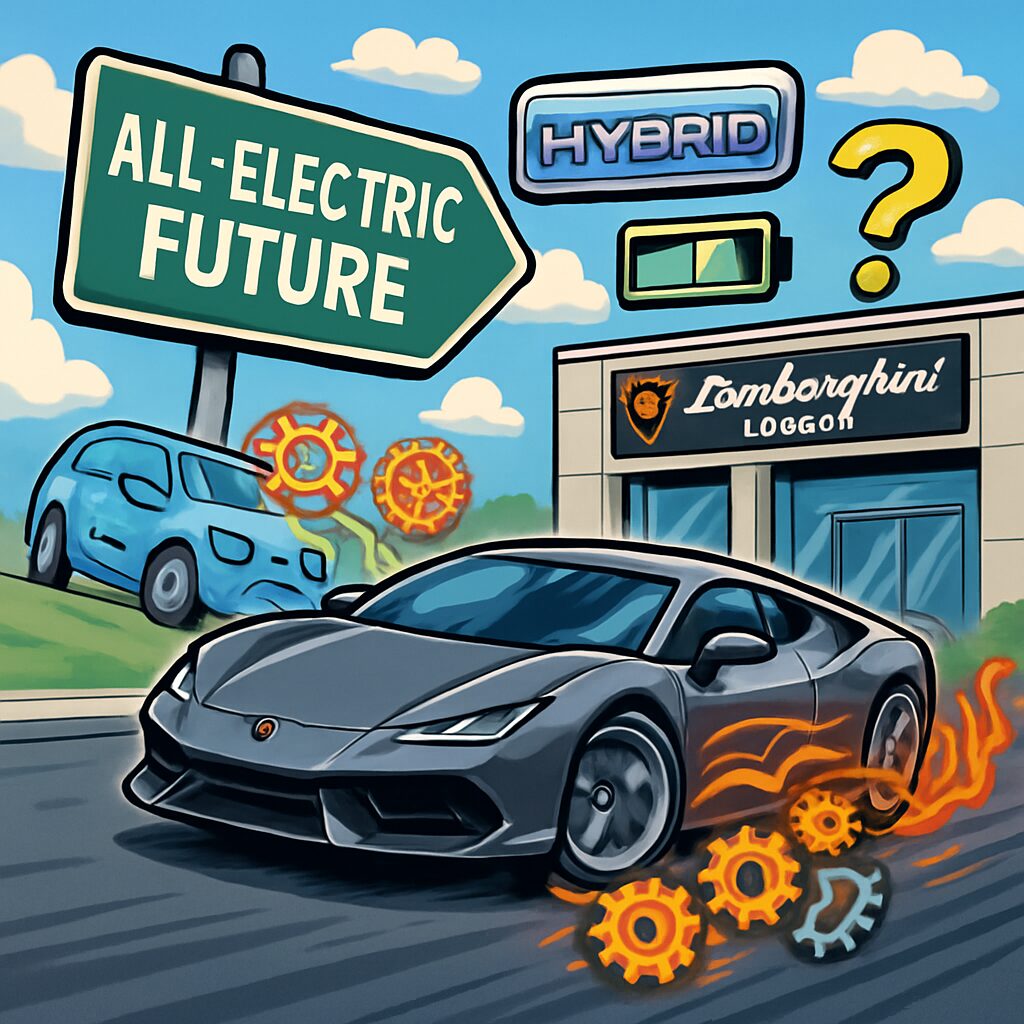

Executive summary: Lamborghini has pivoted from its all-electric strategy, with CEO Stephan Winkelmann emphasizing that customers still crave the auditory and emotional experience of internal combustion engines. The luxury carmaker will continue incorporating these engines into its vehicles for at least the next decade, responding to a perceived decline in electric vehicle enthusiasm among high-end buyers.
In an interview at Lamborghini’s London showroom, Winkelmann revealed that the company is reassessing its electric vehicle plans, which were initially set to transition the brand fully to battery power. He stated that enthusiasm for electric cars is waning, creating an opportunity to focus on hybrid technology instead. This shift marks a significant departure from Lamborghini’s earlier commitments to electrification, highlighting the challenges even luxury manufacturers face in adapting to evolving market demands.
Lamborghini’s current lineup includes three main models: the Temerario and Revuelto supercars, both plug-in hybrids with limited all-electric range, and the Urus SUV, available as a plug-in hybrid or conventional petrol vehicle. The Urus, despite being less ostentatious than the supercars, accounts for over half of the company’s sales, underscoring its commercial importance. Additionally, a limited-edition Fenomeno super-sports car, with a top speed exceeding 215 mph, is being produced in very small numbers at a cost of at least €3 million each.
The company had previously announced plans for an all-electric successor to the Urus, slated for 2029, but recently shelved that project, now expecting it no earlier than 2035. Similarly, the future of the Lanzador, a brand-new grand tourer concept, is uncertain, with a decision pending on whether it will be fully electric or a plug-in hybrid. Winkelmann indicated that this decision will be made within the next month, reflecting the fluidity of Lamborghini’s strategy in the current automotive landscape.
Winkelmann attributed the change in direction to customer preferences, noting that buyers still want “the sound and the emotion” of internal combustion engines. He described continuing with these engines for another decade as “paramount for the success of the company,” suggesting that hybrid systems will play a key role in balancing performance with environmental considerations. This approach contrasts with that of rival Ferrari, which is advancing with its first all-electric model, the Elettrica, set to debut next year.
Despite the shift, Winkelmann asserted that Lamborghini remains socially responsible, though he downplayed its environmental impact due to its low production volume—selling only 10,000 cars annually in a global market of 80 million. He argued that this limited scale means the company’s CO2 emissions are not significantly impactful, a point that may resonate with regulators. In the EU and UK, bans on new petrol and diesel cars, including plug-in hybrids, are scheduled for 2035, but exemptions exist for low-volume manufacturers like Lamborghini, which sold just 795 cars in the UK last year.
The decision reflects broader industry trends, where some automakers are pushing for more time to transition to electric vehicles amid geopolitical and industrial realities. If regulations evolve, internal combustion engines could remain viable beyond current deadlines, potentially benefiting niche manufacturers. For Lamborghini, this strategic pivot allows it to cater to core customer desires while navigating regulatory pressures, ensuring its iconic brand identity endures in a changing automotive world.