

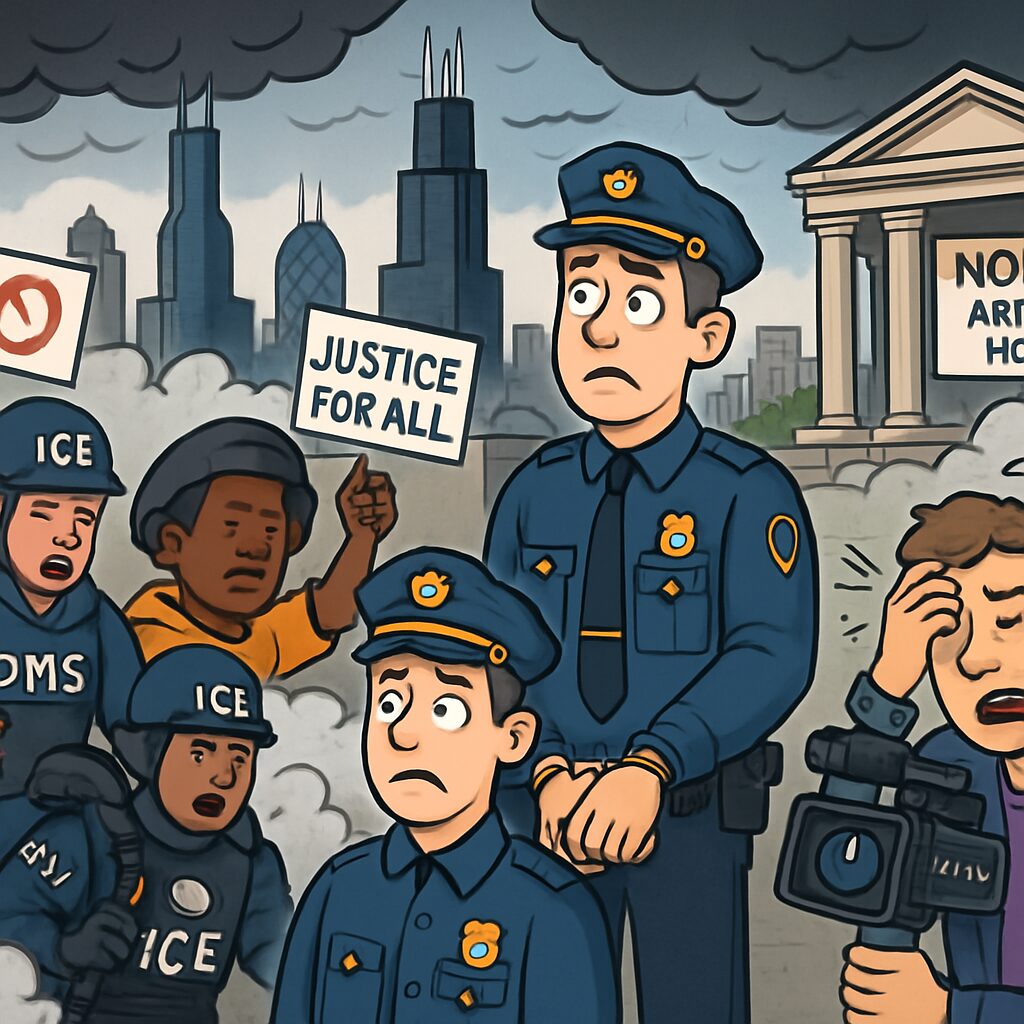

Chicago has become the focal point of an intense immigration enforcement operation, with a series of rapid developments underscoring the city’s status as a battleground in the national crackdown. Federal authorities’ “Operation Midway Blitz” has triggered legal challenges, community unrest, and significant arrests, all unfolding within a contentious political landscape.
The operation, launched by the Department of Homeland Security in early September, targets individuals deemed “criminal illegal aliens,” blaming Chicago’s sanctuary city policies for attracting such populations. DHS claims over 1,500 arrests have been made, though data reveals that these figures encompass a broader six-state region, not solely Chicago. This has raised questions about the accuracy and scope of the enforcement efforts, as the numbers include arrests from Illinois, Indiana, Wisconsin, Missouri, Kentucky, and Kansas.
Recent court interventions have added layers of complexity. On October 16, a federal appeals court continued to block President Trump’s deployment of National Guard troops in the Chicago area, ruling that the facts do not justify the action under federal law. The court allowed the troops to remain under federal control but restricted their deployment within Illinois, reflecting ongoing judicial scrutiny of the administration’s tactics and highlighting the legal tensions surrounding the crackdown.
Simultaneously, ICE agents arrested a Hanover Park police officer accused of overstaying his tourist visa since 2015, highlighting the reach of enforcement into unexpected areas. The police department defended the hire, stating it complied with federal law and that the officer had valid work authorization, including a renewed work card and approval to carry a firearm. This incident has sparked debates about the targeting of individuals and the verification of immigration status, with implications for trust in law enforcement.
Protests and clashes have become daily occurrences, with federal agents using tear gas to disperse crowds in neighborhoods like the East Side. In one standoff, agents fired tear gas after a tense confrontation, leading to complaints of excessive force and injuries among protesters. A U.S. District Judge, citing these events, ordered ICE agents in the Chicago area to wear body cameras, expressing concern that her orders weren’t being followed and emphasizing the need for accountability in volatile situations.
Legal barriers are mounting, as a Cook County judge barred ICE from arresting people at courthouses, a common tactic for agents. This order, effective immediately, aims to protect access to justice for all residents, regardless of immigration status. Meanwhile, the removal of a controversial fence outside the Broadview ICE facility was hailed as a victory for local governance, though new concrete barriers were installed, maintaining a fortified appearance and ongoing tensions between federal authorities and community members.
The crackdown has drawn criticism for its impact on communities, with reports of U.S. citizens being detained and non-criminals like food vendors targeted. Advocates point to instances where individuals were arrested without cause, fueling fears and distrust, such as the detention of a tamale vendor and allegations that ICE agents shot pepper balls at journalists. The use of full-body restraints during deportations has also come under scrutiny, with allegations of inhumane treatment and links to fatalities in other cases.
As the situation evolves, the focus remains on the balance between enforcement and civil liberties. With ongoing protests, legal battles, and operational updates, Chicago’s role as the epicenter of this immigration crackdown is likely to persist, shaping national discourse and policy responses in the coming days. The community continues to organize “Know Your Rights” efforts, while federal agencies face increasing oversight and pushback from local governments and courts.