

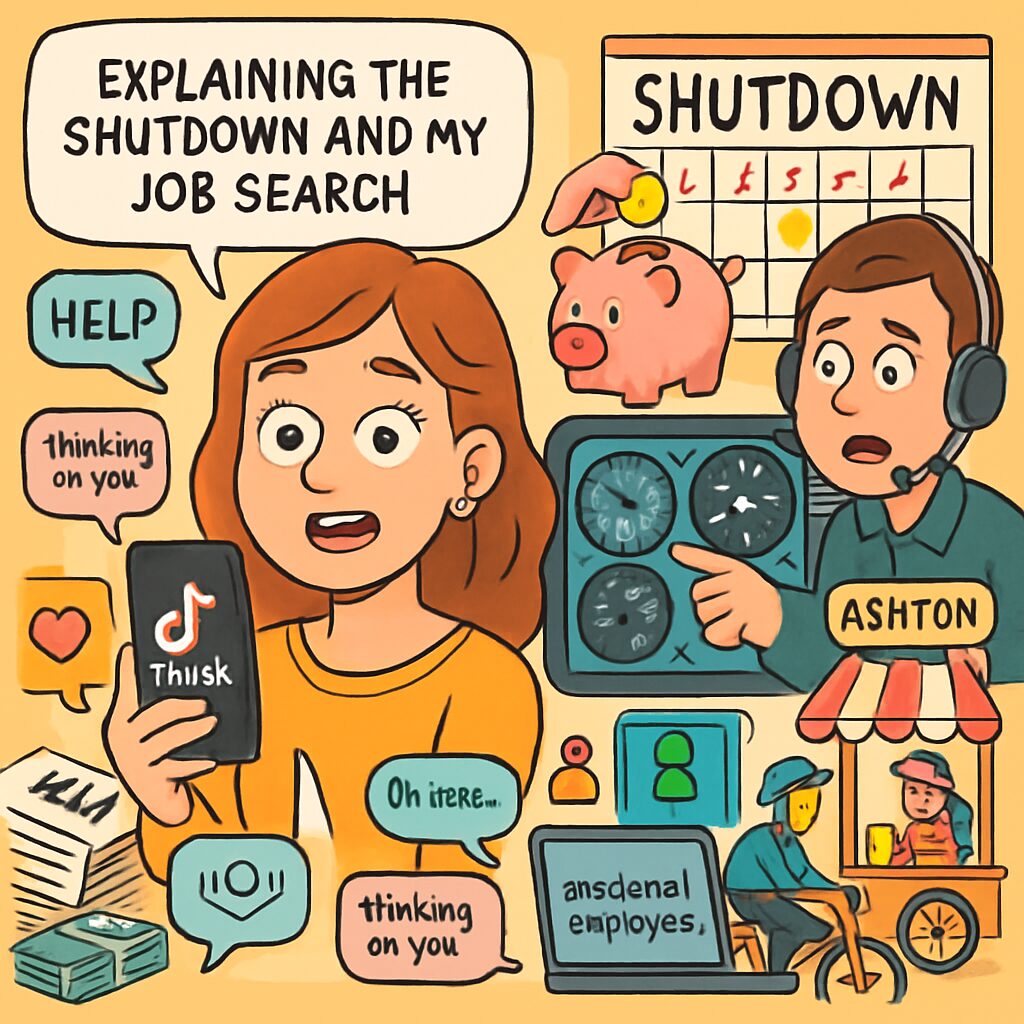

During the current government shutdown, federal employees are leveraging TikTok to chronicle their daily struggles and seek community support, turning the platform into a digital diary of furlough life. Their videos range from educational explanations of the shutdown’s mechanics to personal accounts of financial hardship and side hustle attempts.
As the shutdown entered its second week, workers like Aubrey, a public health employee, began posting ‘day in the life’ videos to humanize the experience for the public. She details topics such as the distinction between essential and non-essential staff, while also sharing her own job search efforts after hopes for a permanent position faded due to earlier budget cuts. Aubrey views TikTok as a potential income source, though she acknowledges the challenges of monetizing a new account without enough followers for the creator fund.
On the other hand, Ashton, an air traffic controller, uses his established TikTok page with his wife to address misconceptions about the shutdown’s impact on aviation safety. In a viral post, he explained receiving his last paycheck and the legal prohibitions against essential workers taking action against the government. His content aims to educate viewers, as he and his family dip into savings and reconsider travel plans due to the income loss, with his video garnering over 70,000 views.
The hashtag #federalemployees has accumulated nearly 10,000 posts on TikTok, including contributions from employment lawyers and other service providers targeting affected workers. While not all videos are serious—some use humorous audio clips to lighten the mood—many convey urgent messages about compassion and understanding. One user emphasized that promised back pay doesn’t cover immediate bills, echoing widespread frustration among the roughly 1.4 million employees furloughed or working without pay.
Financial pressures are mounting, with essential workers reporting initiatives like office food pantries to support colleagues. The White House’s recent comments questioning back pay have intensified anxieties, coinciding with layoff notifications for thousands. This uncertainty fuels the TikTok trend, as workers seek both emotional solace and practical advice from their online communities, highlighting the human cost of political gridlock.
Ultimately, these videos demonstrate how digital platforms can amplify marginalized voices during crises, fostering solidarity among dispersed employees. They serve as a real-time archive of the shutdown’s ripple effects, from individual stress to broader public awareness, urging policymakers and the public to recognize the personal dimensions of political decisions as negotiations stall in Congress.