

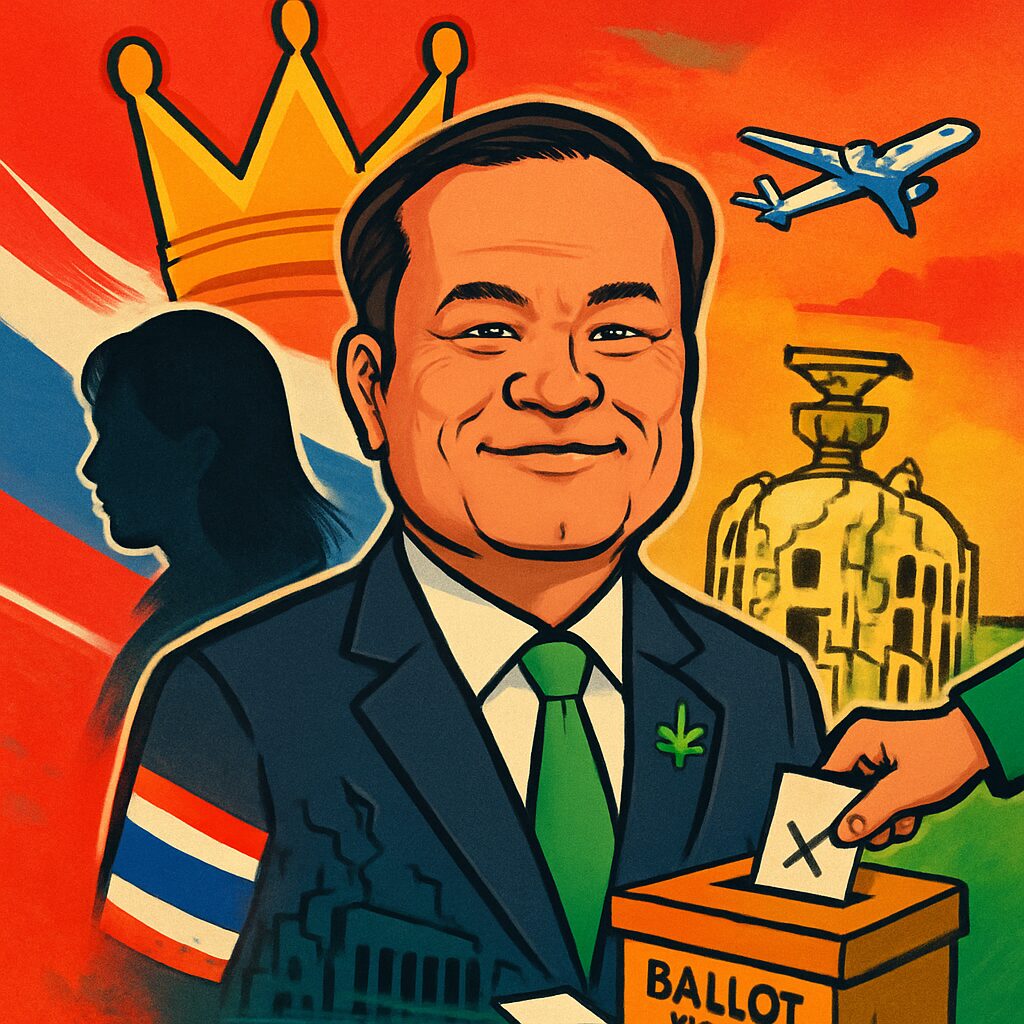

Thailand’s parliament has elected Anutin Charnvirakul as the new prime minister, marking the third leadership change in two years amid ongoing political instability. This development follows the ouster of Paetongtarn Shinawatra and signals a potential shift away from the long-dominant Shinawatra political dynasty.
The vote took place on September 5, 2025, with parliament convening to select a new leader after days of political chaos. Anutin Charnvirakul secured a majority with over 247 votes in the 492-member lower house, supported by a coalition that includes the People’s Party, the largest parliamentary bloc. His victory was confirmed through a ballot process that highlighted the fragmented nature of Thai politics.
Anutin, a 58-year-old construction magnate and leader of the Bhumjaithai Party, brings extensive political experience, having previously served as deputy prime minister, interior minister, and health minister. He is widely known for spearheading the decriminalization of cannabis in Thailand, making it the first country in Asia to do so. His conservative and royalist leanings contrast with the populist approach of the Shinawatra family.
This leadership change was necessitated by the Constitutional Court’s ruling on August 29, which removed Paetongtarn Shinawatra from office due to ethical breaches. The court found that she lacked integrity in a leaked phone call with Cambodia’s former leader during a border conflict, which severely damaged her Pheu Thai Party’s popularity and stability.
Simultaneously, Thaksin Shinawatra, the patriarch of the political dynasty, departed Thailand for Dubai on September 4, citing medical reasons. His departure ahead of a Supreme Court ruling on September 9, which could result in his imprisonment, has fueled speculation about his return and the future of his family’s influence in Thai politics.
The agreement for Anutin’s support from the People’s Party includes conditions such as dissolving parliament for early elections within four months and working on drafting a new constitution. This reflects ongoing tensions between progressive and conservative forces, with the People’s Party opting to remain in opposition despite their backing.
This election could end the Shinawatra family’s dominance, which has characterized Thai politics for over two decades, often clashing with the conservative establishment. The outcome may lead to a more stable yet conservative governance, impacting Thailand’s economic and social policies.
Looking ahead, the new government will need to address challenges like economic recovery, social reforms, and navigating relationships with the monarchy and military, while the impending court ruling on Thaksin adds further uncertainty to the political landscape.