

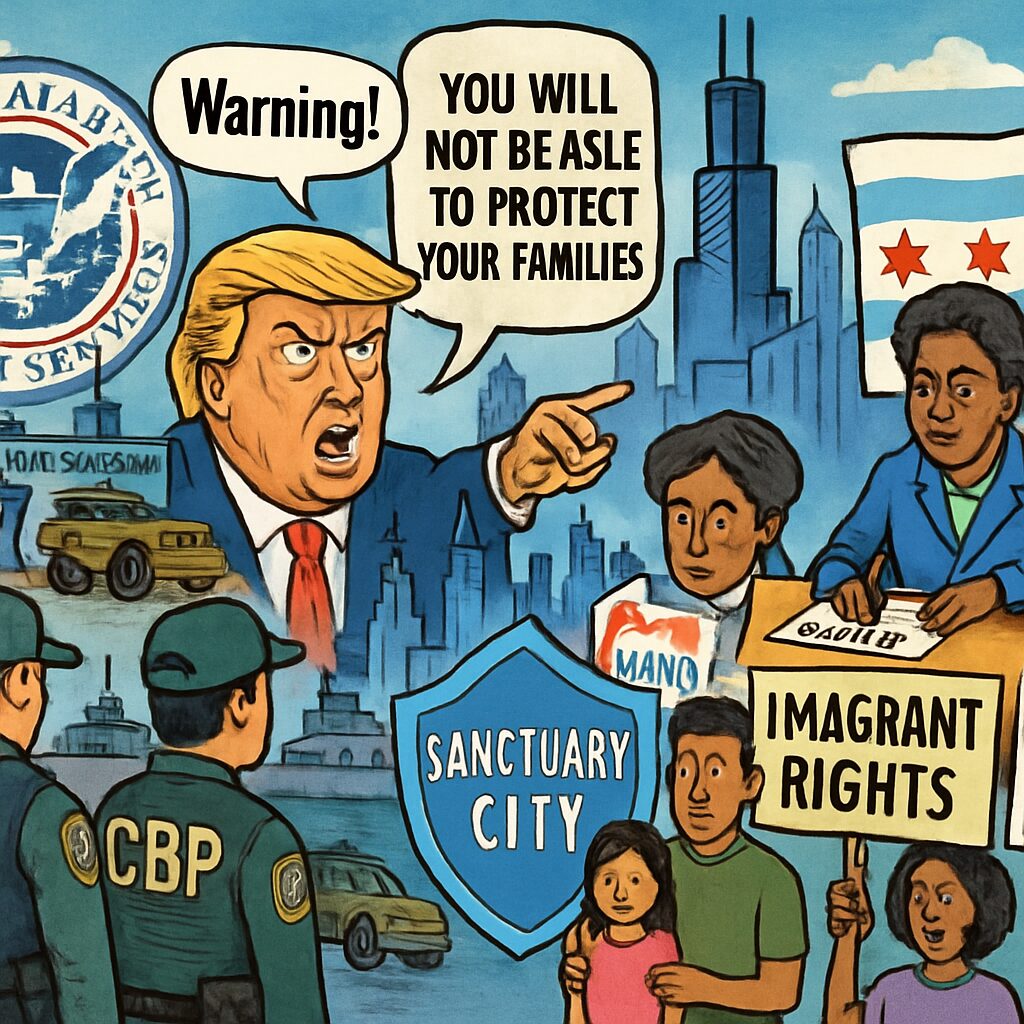

The Trump administration is preparing to intensify immigration enforcement operations in Chicago, with Homeland Security Secretary Kristi Noem confirming plans to deploy additional federal agents, as President Donald Trump continues to criticize local Democratic leaders for their resistance.
The Department of Homeland Security has requested logistical support from Naval Station Great Lakes, located approximately 35 miles north of Chicago, to facilitate the anticipated operations, suggesting a sustained effort potentially through September. This move mirrors tactics employed in Los Angeles earlier this year, involving agents from Immigration and Customs Enforcement (ICE) and Customs and Border Protection (CBP), with the possibility of National Guard support, although Secretary Noem did not confirm troop deployments.
President Trump has publicly lashed out at Illinois Governor JB Pritzker and Chicago Mayor Brandon Johnson, warning them to address crime issues quickly or face federal intervention. In a social media post, Trump emphasized his dissatisfaction with the city’s leadership, accusing them of failing to maintain order.
In response, Mayor Johnson signed an executive order on Saturday, August 31, prohibiting the Chicago Police Department from assisting federal authorities with immigration enforcement, including patrols, traffic stops, and checkpoints. The order reaffirms the city’s sanctuary policies and aims to protect residents’ constitutional rights amidst the federal threat.
Governor Pritzker has accused the Trump administration of attempting to undermine democracy and potentially influence elections, stating that the mobilization could be part of a broader strategy to exert control. Both officials plan to sue if the federal government proceeds with the deployment, arguing that crime has fallen in Chicago and that the operation is politically motivated.
Chicago has a large immigrant population and has long been at odds with federal immigration policies due to its sanctuary city status, which limits cooperation with immigration enforcement. This conflict dates back to Trump’s first term, with previous legal battles over funding and cooperation that were often blocked by courts.
Meanwhile, thousands of protesters gathered in Chicago over the Labor Day weekend to demonstrate against the expected federal presence, highlighting community concerns and opposition to the administration’s tactics. The protests were largely peaceful but underscored the deep divisions over immigration policy.
The situation remains tense, with legal challenges likely and ongoing preparations on both sides. The outcome could set precedents for federal-state relations and immigration enforcement in other Democratic-led cities, shaping the political landscape leading into future elections.